


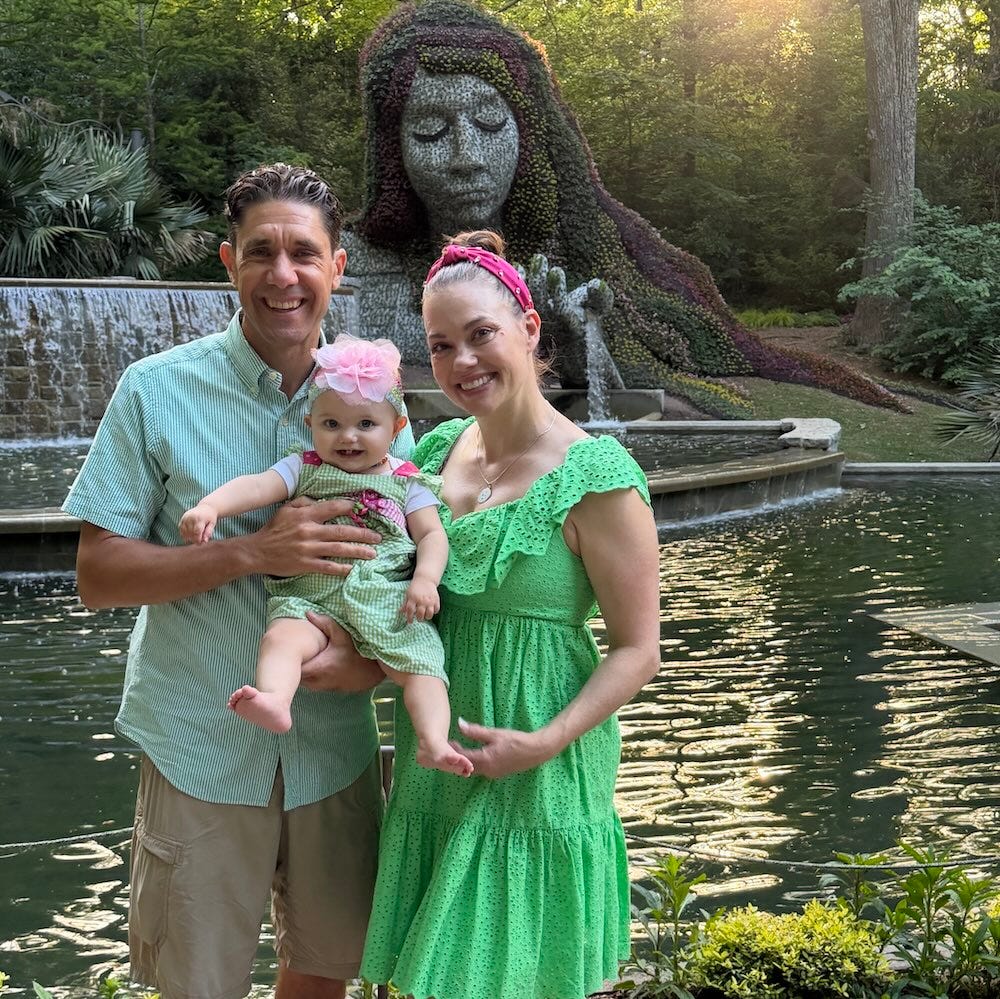
We have learned the hard way that nothing in our home, our marriage, or our health changes for long without the Word of God doing the work underneath. When you look at God’s Word as food for the soul, praying “give us this day our daily bread” takes on a whole new meaning, doesn’t it?
If a researcher told you there was one habit, anchored in real data from more than 100,000 Christians across 21 countries, that predicted spiritual transformation more reliably than any other single practice in the Christian life, would you want to know what it was, and would you actually do it?
Most of us nod yes to the first half of that sentence and stop there. We collect the wisdom and never close the loop.
We read the verse, we underline the principle, we go back to the same scrolling, the same snacking, the same low-grade stress that has been wearing us down for months, and we wonder why nothing in our health is moving.
What follows is the part of Scripture engagement most Christians have never had spelled out for them in numbers, and what we have personally watched it do inside our family of nine for over twenty years.
The Largest Study Most Christians Have Never Heard Of
The Center for Bible Engagement (CBE) set out to answer one question: which spiritual practice predicts transformation most reliably in the life of a believer?
This was not a survey of opinions, a denominational poll, or a magazine quiz; it was a research project measuring real outcomes against real practices over eight years and across more than 100,000 people in the United States and 20 other countries.
They measured the practices we have all been taught matter: prayer frequency, church attendance, small-group involvement, sharing faith with others, and engagement with Scripture. Then they measured outcomes that matter: spiritual growth, emotional health, behavior change, freedom from destructive habits, generosity, and the ability to disciple others.
They controlled for age, gender, church attendance, and prayer practices, so that whatever signal emerged was not just a stand-in for general religiosity.
The point was to isolate the one variable doing the actual work, and to test it across enough lives that the effect would either hold up or fall apart.
The same finding kept showing up across every category, and it is the finding the modern church has barely talked about. The single most predictive spiritual practice for transformation across moral behavior, emotional health, proactive faith, and self-perceived growth was not church attendance, not small-group involvement, and not even prayer in isolation; it was engaging Scripture four or more days per week, and the researchers named it the “Power of 4.”
Know someone who needs to hear this?
Share it with them before you keep reading.
The Threshold That Changes Everything
Here is the part that should stop every Christian reader in their tracks. Engaging the Bible one to three days per week showed no statistically significant difference from not engaging the Bible at all, which means three light brushes with Scripture across a busy week looked, in the data, the same as zero.
That sentence is hard for most of us to absorb, because it cuts directly across the cultural Christian assumption that “any” Bible reading is enough.
At four or more days per week, everything shifts, and the shift is not gradual. It is the cliff edge of a measurable, repeatable transformation effect that does not show up at three days and does show up at four.
“Do not be conformed to this world, but be transformed by the renewal of your mind, that by testing you may discern what is the will of God, what is good and acceptable and perfect.” — Romans 12:2
What Paul wrote to the Romans almost 2,000 years ago, the CBE researchers measured directly. The renewing of the mind is not a metaphor.
It is a mechanism, and the mechanism turns on at four days per week of receiving, reflecting on, and responding to the Word.
“I’m grateful to be here, receiving encouragement, recipes, and whole-body transformation. Even after trying times, I trust you and Mama Z. The spiritual aspect completes the system: body, soul, and spirit.”
— Ellen D.
What the Power of 4 Actually Predicts
Across the CBE research, those who engage Scripture four or more days per week show measurably lower odds of struggling with the things most Christian families quietly carry. The numbers below are reductions in odds compared with believers who engage Scripture three days per week or fewer.
Spiritual growth gains.
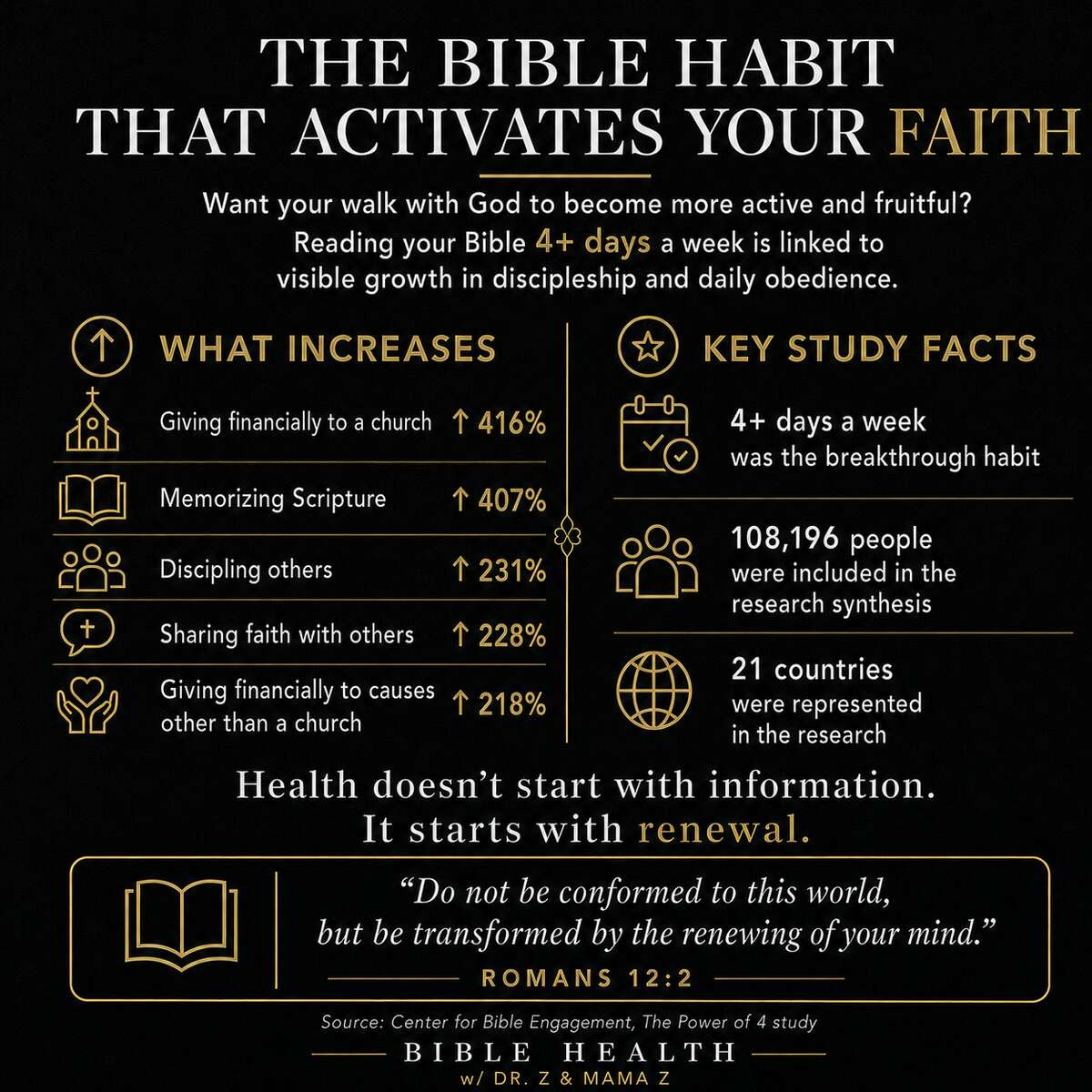
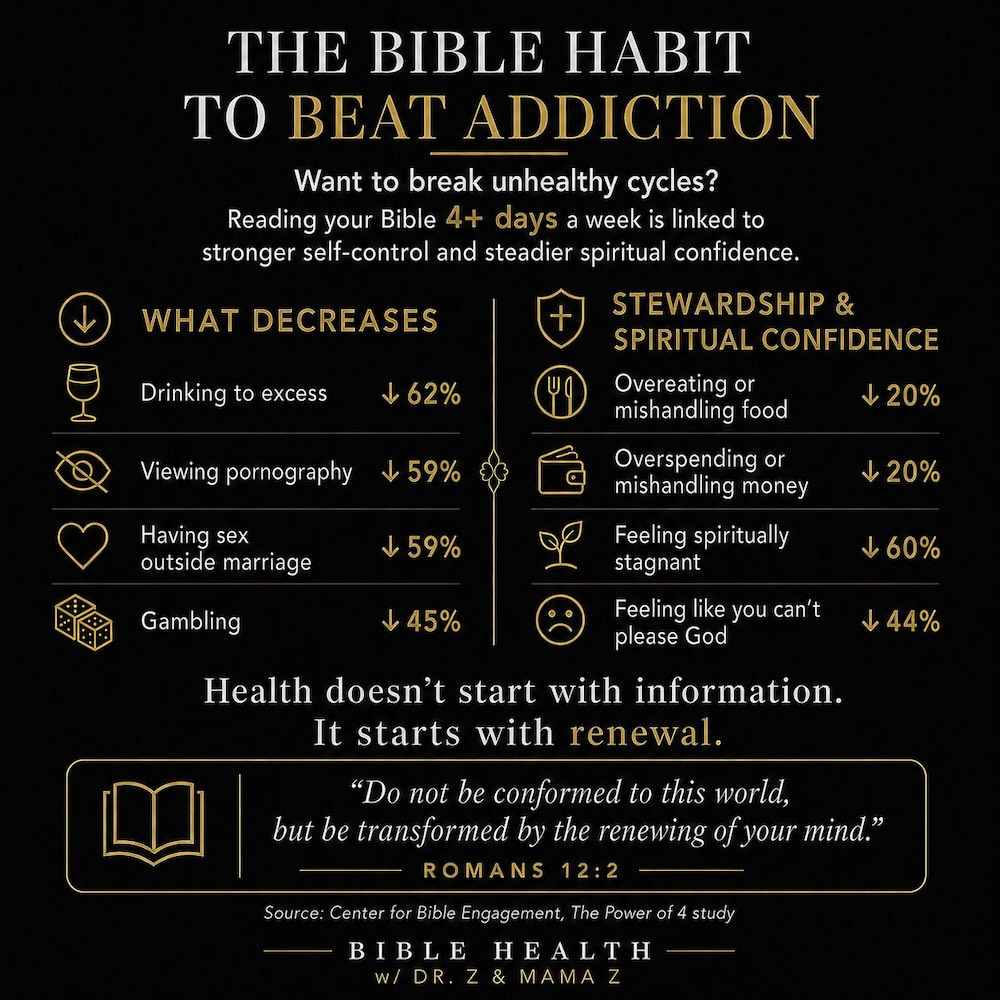
60% less likely to feel spiritually stagnant and 44% less likely to feel like they cannot please God. These are the two markers most associated with quiet drift in a Christian’s walk, and they are precisely the two that respond hardest to consistent Bible engagement.
Emotional struggles ease.
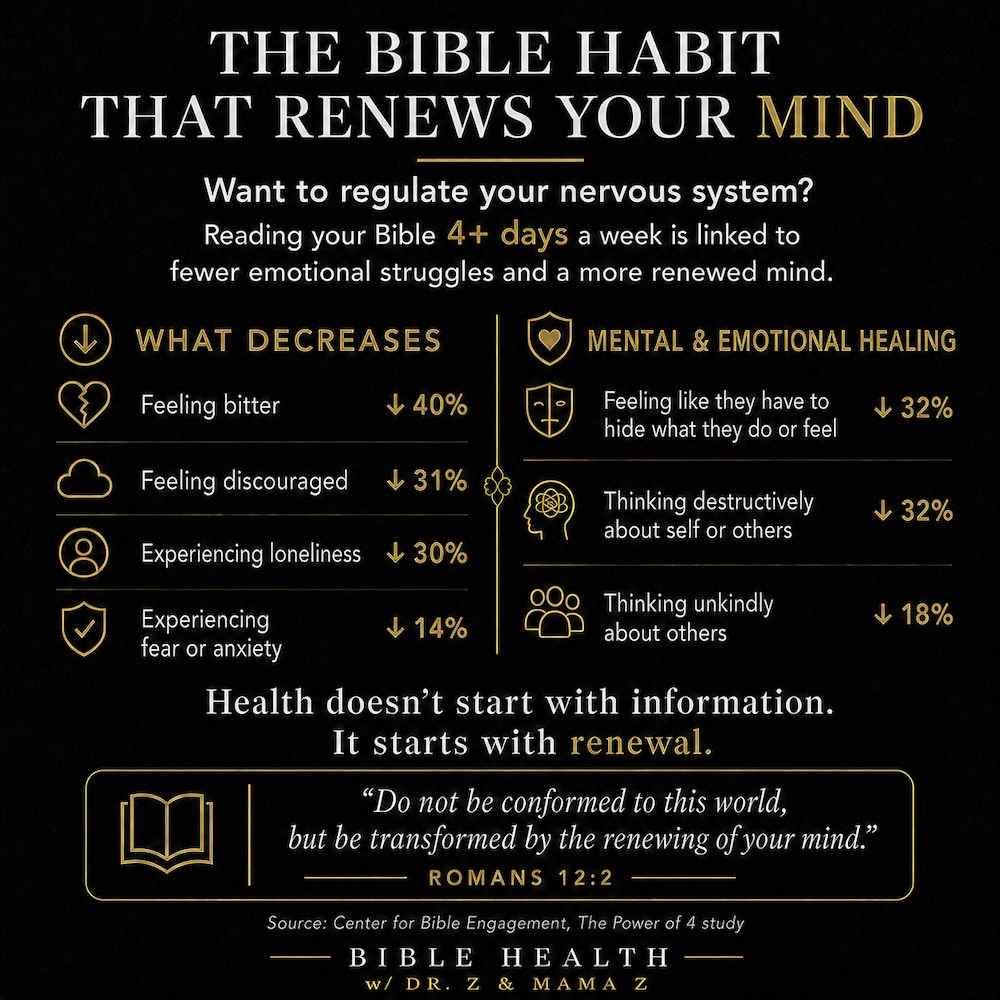
40% less likely to feel bitter, 32% less likely to think destructively about themselves or others, 31% less likely to feel discouraged, 30% less likely to experience loneliness, 26% less likely to struggle to forgive themselves, and 14% less likely to experience fear or anxiety. These are not mood-board affirmations.
They are measured changes in the daily emotional lives of believers who simply opened the Bible four times a week instead of once or twice.
Destructive behavior loosens its grip.
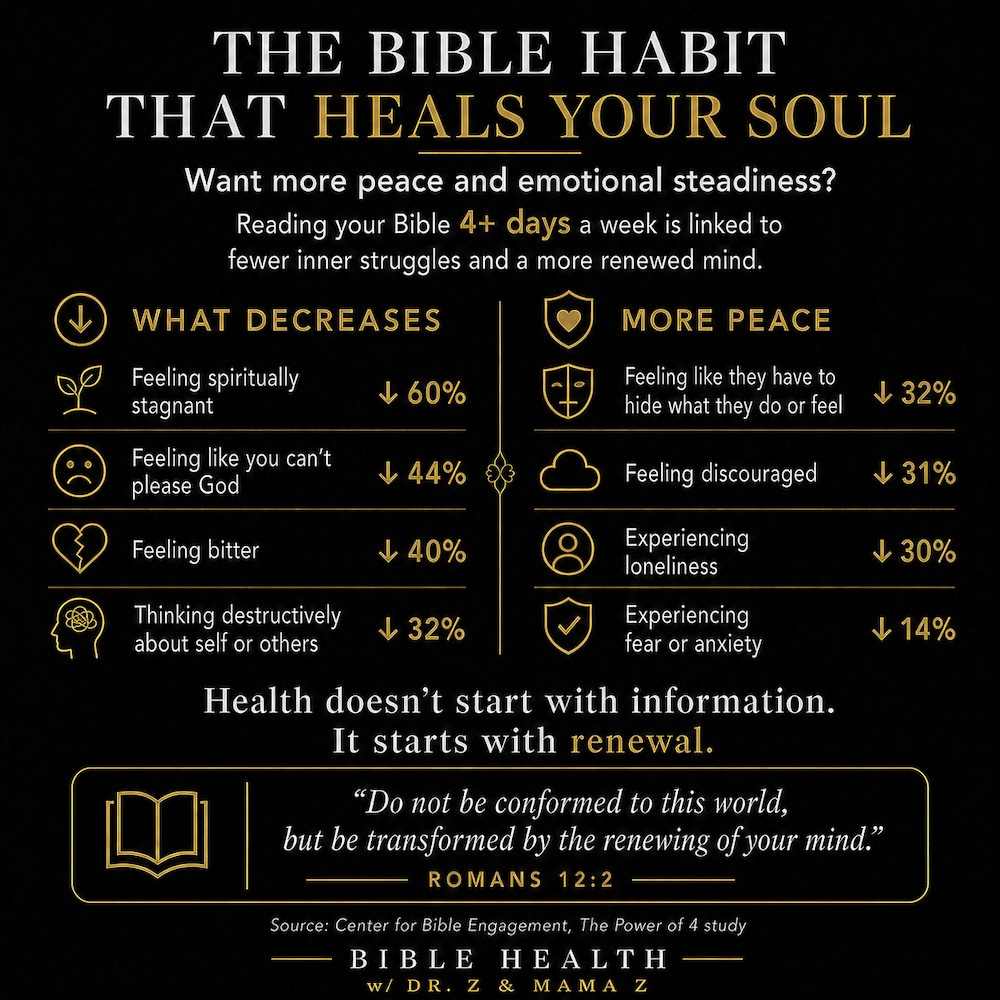
62% less likely to drink to excess, 59% less likely to view pornography, 31% less likely to lash out in anger, 20% less likely to overeat or mishandle food, and 20% less likely to overspend or mishandle money. Read those last two again, because for the Christian family wrestling with weight, food, and money the way most Christian families do, the implications run straight into the kitchen and the bank account.
Develop Godly behavior.
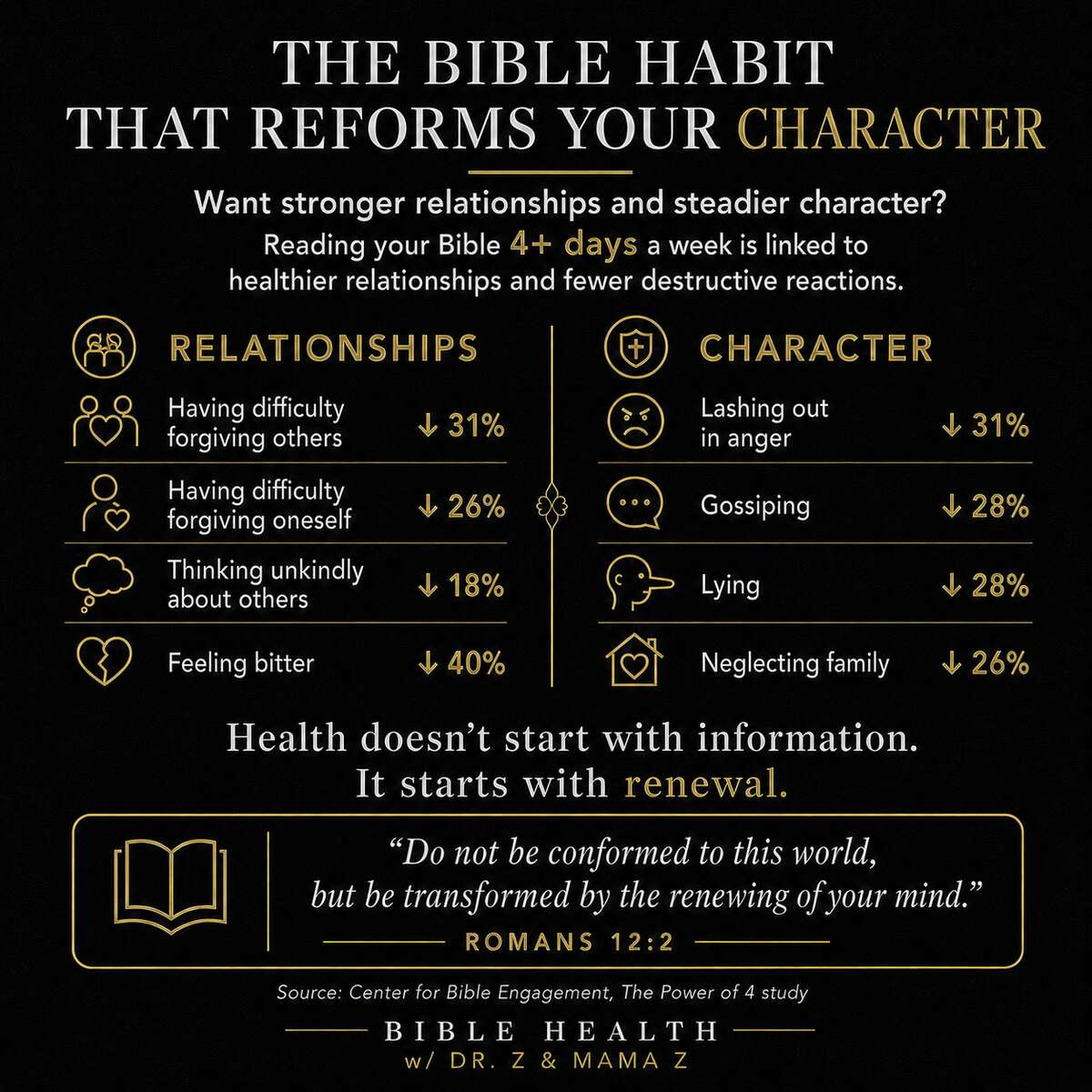
31% drop in lashing out in anger, 28% dip in gossiping and lying, a potentially marriage-saving 26% decrease in neglecting your family. God’s Word transforms your character into the image of Christ like no other activity on the planet.
Yes, you can pray. Yes, you can fast.
Yes, you can give everything you have to the poor. But the best strategy to building a godly character and healthy relationships with those around you is by reading God’s Word.
Your walk with God becomes more productive.
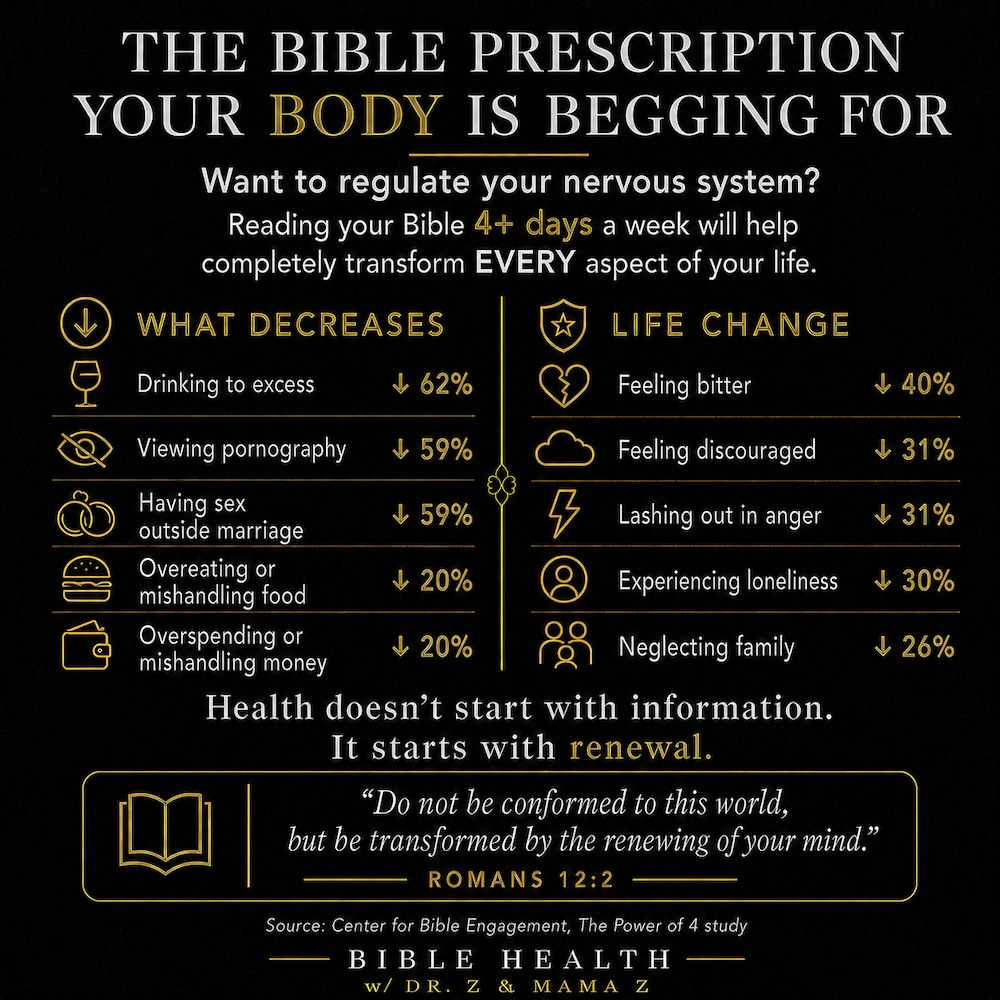
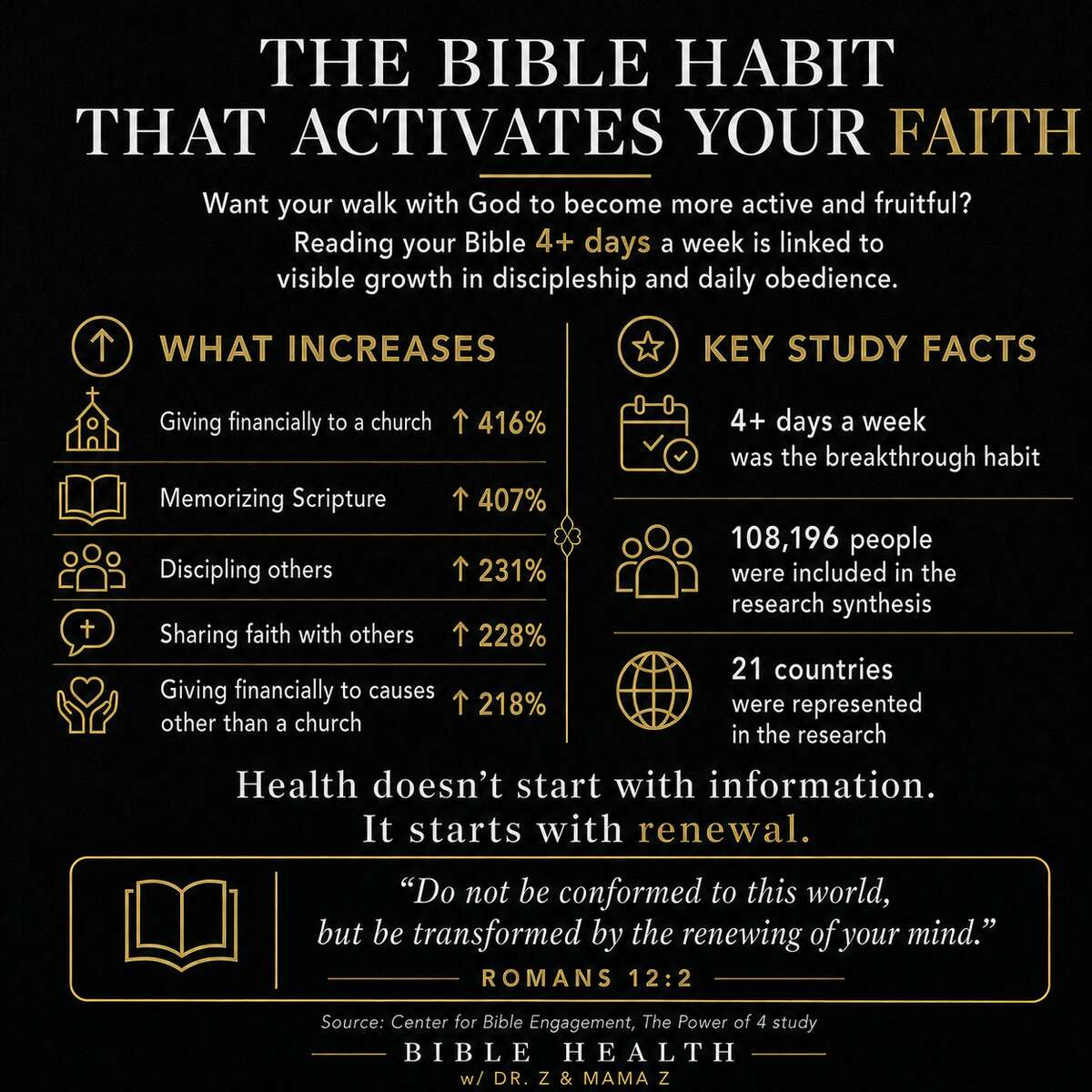
Those who engage Scripture most days of the week are 416% more likely to give financially to their church, 407% more likely to memorize Scripture, 231% more likely to disciple another believer, 228% more likely to share their faith with others, and 218% more likely to give financially to causes outside their church. These are not marginal lifts.
They are categorical, multiplied effects that show up at four days per week and not before.
Makes us think of one of our favorite Psalms…
“Blessed is the man who walks not in the counsel of the wicked, nor stands in the way of sinners, nor sits in the seat of scoffers; but his delight is in the law of the LORD, and on His law he meditates day and night. He is like a tree planted by streams of water that yields its fruit in its season, and its leaf does not wither. In all that he does, he prospers. The wicked are not so, but are like chaff that the wind drives away. Therefore the wicked will not stand in the judgment, nor sinners in the congregation of the righteous; for the LORD knows the way of the righteous, but the way of the wicked will perish.” — Psalm 1:1-6
This is why the practical work and the spiritual work cannot be separated, and why so many of the small daily swaps that look “physical” at first glance are actually mind-renewal practices in disguise.
Why “More Religious People” Is Not the Explanation
The most common pushback we hear from Christians who first encounter the Power of 4 is the obvious one: aren’t you really just measuring “more committed Christians” who happen to read the Bible more? The CBE researchers heard that question too, and they ran the math against it.
They controlled for church attendance and prayer practices, which means the effect of Scripture engagement was measured net of those other factors, and the effect held.
Scripture engagement is not a proxy for religiosity. It is a distinct variable with its own measured weight, and the weight is heavier than any other single spiritual practice they tested.
Put plainly, two believers with identical church attendance, identical prayer habits, identical demographics, and a different number of days per week in the Word will look measurably different in moral behavior, emotional health, proactive faith, and self-perceived growth.
“This Book of the Law shall not depart from your mouth, but you shall meditate on it day and night, so that you may be careful to do according to all that is written in it. For then you will make your way prosperous, and then you will have good success.” — Joshua 1:8
The Old Testament said it, the New Testament said it, and the data has now confirmed it across eight years and over 100,000 lives. The mechanism God built into His Word is the same mechanism the researchers measured.
The reason this matters for Bible Health specifically, and not just for theology in the abstract, is that most of the health advice landing in Christian homes is downstream of trends, not Scripture, and the result is exhausted families chasing the next supplement, the next protocol, the next influencer.
The Emotional Health Data Is the One Most Christians Need
Bible Health is not just about the body. It is about every dimension of John 10:10 abundant life, which means spiritual, physical, mental, emotional, financial, occupational, and social health, and the chain is only as strong as its weakest link.
The emotional-health data inside the Power of 4 is striking precisely because it is the dimension most Christian families silently carry alone.
Receiving, reflecting on, and responding to God’s Word four or more days per week reduces the odds of feeling bitter by 40%, of destructive thinking by 32%, of discouragement by 31%, of loneliness by 30%, of difficulty forgiving oneself by 26%, and of fear and anxiety by 14%.
The God who designed the body to heal designed the mind to be renewed, and the data is the fingerprint of that design showing up in the lives of ordinary people who simply made room for the Book four times a week.
“Thank you so much for everything you all do, and especially today for the Scriptures. I really needed those today.”
— Mary G.
Where This Sits Inside the Seven R’s
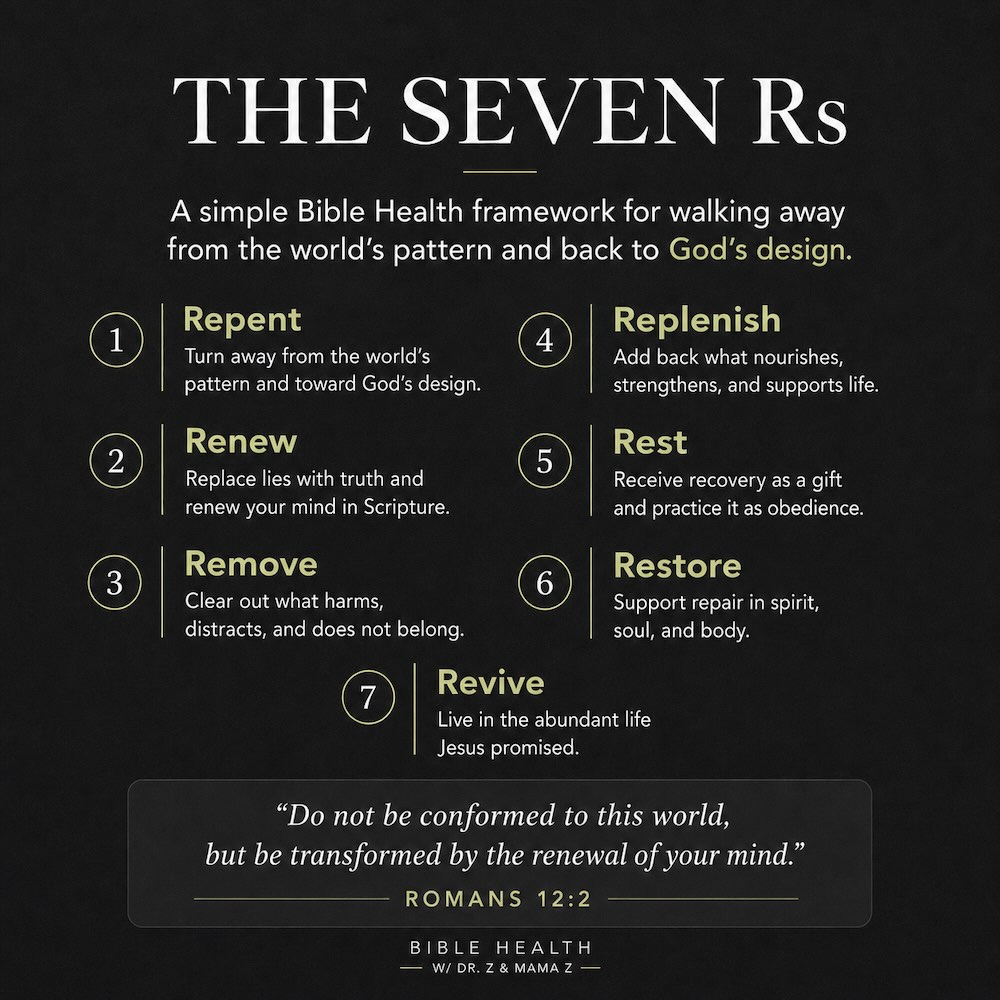
If you have read our work for any length of time, you know that the Bible Health journey runs along the Seven R’s: Repent, Renew, Remove, Replenish, Rest, Restore, Revive. We laid the full framework out in our cornerstone article on why Christians are drowning in health trends, and the Power of 4 is the load-bearing science underneath the second R: Renew.
Renewing the mind is not a slogan. It is the part of the journey where the world’s pattern (hyper-palatable food, fragrance chemicals, blue light at midnight, no-margin stress, comparison scrolling) gets dismantled by the Word and replaced with the mind of Christ at the level of habit.
Repentance turns the direction, renewal is what does the rebuild, and the CBE data is what the rebuild actually looks like when it is measured at scale. Before any meaningful R3 (Remove) work holds, this R2 (Renew) work has to be running underneath, week after week, year after year, for the rest of the journey.
For anyone newer to Bible Health, the on-ramp for all of this is our launch article, Welcome to Bible Health, where we make the case that Christians do not need another diet and we do not need another supplement. We need the mind renewed first, and the body follows.
The Augustine Principle: Pray as if God Does Everything, Work as if You Do
A saying often credited to Augustine puts it this way: “Pray as though everything depended on God; work as though everything depended on you.” That single sentence is the entire Bible Health philosophy compressed into a hinge.
God designed the body to heal. The Word renews the mind.
The daily health swaps and choices are our faithful participation in both, and refusing one half of the equation has never been faithfulness; it has been imbalance dressed up as piety.
We do not sit back and wait for God to heal what He has invited us to steward. We also do not white-knuckle the work as though our willpower is the engine of transformation.
We pray hard, we read hard, we move our bodies, we tend the food in our pantry, we cultivate the relationships under our roof, and we do all of it from the platform of a mind that is being measurably reshaped by Scripture, in the same pattern the Power of 4 confirmed across more than 100,000 lives.
This is not a Bible reading plan with health tips bolted on. It is health teaching anchored in the one practice the data identifies as the single most reliable predictor of transformation in a believer’s life.
This is what 1 Thessalonians 5:21 looks like when it is taken seriously:
“But test everything; hold fast what is good.” — 1 Thessalonians 5:21
The test has been run. The hold is on us.
A Prayer for You. 🙏
Heavenly Father, thank You for Your Word, which renews my mind and brings life to every part of me.
Give me a hunger to open my Bible often, and let Your truth shape my thoughts, my words and my choices.
Grow godly habits in me, one faithful day at a time, so I keep walking closer to You.
Let the time I spend in Your Word overflow into peace, joy and strength for my family.
Amen.
Upgrade and learn what God’s Word says about every area of life
and how to live it. That’s what Bible Health is all about.
Walk each 6-week live group study the day it opens.
Get the Blueprint and every weekly Swap.
Follow Jesus, not trends, in every area.
As always, our hope and prayer is that you experience the abundant life.
~ Dr. Z & Mama Z
References
· Center for Bible Engagement. Bible Engagement and “The Power of 4”: A Key to Spiritual Growth. https://www.odbm.org/en/our-impact/cbe-stories/bible-engagement-and-the-power-of-4-a-key-to-spiritual-growth
· Center for Bible Engagement. Research Findings. https://www.centerforbibleengagement.org/research-findings
· Center for Bible Engagement. Scientific Evidence for the Power of 4 (PDF). https://bttbfiles.com/web/docs/cbe/Scientific_Evidence_for_the_Power_of_4.pdf
· Center for Bible Engagement. Research overview. https://www.centerforbibleengagement.org/research
· Back to the Bible. Power of Four Bible Reading: A Simple Habit With Big Results. https://www.backtothebible.org/post/power-of-four-bible-reading-a-simple-habit-with-big-results
· Back to the Bible. The Evolution of Bible Engagement: A Research Journey (2004-2023). https://www.backtothebible.org/post/the-evolution-of-bible-engagement-a-research-journey-2004-2023
· Lifeway Research. 9 Tangible Benefits of Bible Reading for Your Church. https://research.lifeway.com/2021/01/20/9-tangible-benefits-of-bible-reading-for-your-church/
· Pew Research Center. Religious Landscape Study (Bible reading frequency baseline). https://www.pewresearch.org/religion/religious-landscape-study/
· American Bible Society. State of the Bible USA (annual report on Scripture engagement). https://1s712.americanbible.org/state-of-the-bible/stateofthebible/State_of_the_Bible-2023.pdf
· Barna Group. State of Scripture engagement research. https://www.barna.com/research/state-of-scripture/
· Davidson, R. J. and Lutz, A. Buddha’s brain: Neuroplasticity and meditation. PMC2944261. https://pmc.ncbi.nlm.nih.gov/articles/PMC2944261/
· Newberg, A. and Waldman, M. R. Words Can Change Your Brain (neuroplasticity and contemplative practice). https://pubmed.ncbi.nlm.nih.gov/22747448/
· Koenig, H. G. Religion, spirituality, and health: The research and clinical implications. PMC3671693. https://pmc.ncbi.nlm.nih.gov/articles/PMC3671693/
· Pargament, K. I. Spiritually integrated psychotherapy. https://pubmed.ncbi.nlm.nih.gov/22642978/
· Krause, N. Religion, prayer, and health (review). https://pmc.ncbi.nlm.nih.gov/articles/PMC4861816/
· Idler, E. L. Religion as a social determinant of public health. https://pubmed.ncbi.nlm.nih.gov/24942099/
· McCullough, M. E. Religious involvement and mortality (meta-analysis). Health Psychology. https://pubmed.ncbi.nlm.nih.gov/10907652/
· Levin, J. S. How religion influences morbidity and health. Social Science and Medicine. https://pubmed.ncbi.nlm.nih.gov/8746868/
· VanderWeele, T. J. Religion and health: A synthesis. https://pmc.ncbi.nlm.nih.gov/articles/PMC6093396/
· Park, C. L. Religious and spiritual aspects of meaning in the context of work life. https://pmc.ncbi.nlm.nih.gov/articles/PMC4998633/
· Lazar, S. W. Meditation experience is associated with increased cortical thickness. NeuroReport. https://pmc.ncbi.nlm.nih.gov/articles/PMC1361002/
· Hummel, C. E. Tyranny of the Urgent. InterVarsity Press. https://www.cslewisinstitute.org/wp-content/uploads/2010/05/Tyranny-of-the-Urgent.pdf
· Our Daily Bread Ministries. Center for Bible Engagement (acquisition and ministry context). https://religionnews.com/2023/07/05/our-daily-bread-ministries-acquires-center-for-bible-engagement-to-help-foster-a-lifelong-love-for-the-bible/
· Stephen Cutchins. The Power of 4 (sermon series overview). https://stephencutchins.com/2021/01/09/thepowerof4/
That's really intersting. Without knowing this, I have been in the word a lot more the past few weeks,, doing what it says here and I have definitely noticed a difference in myself.
I began reading the Bible daily over 30 years ago and I can testify to its transformative power!