


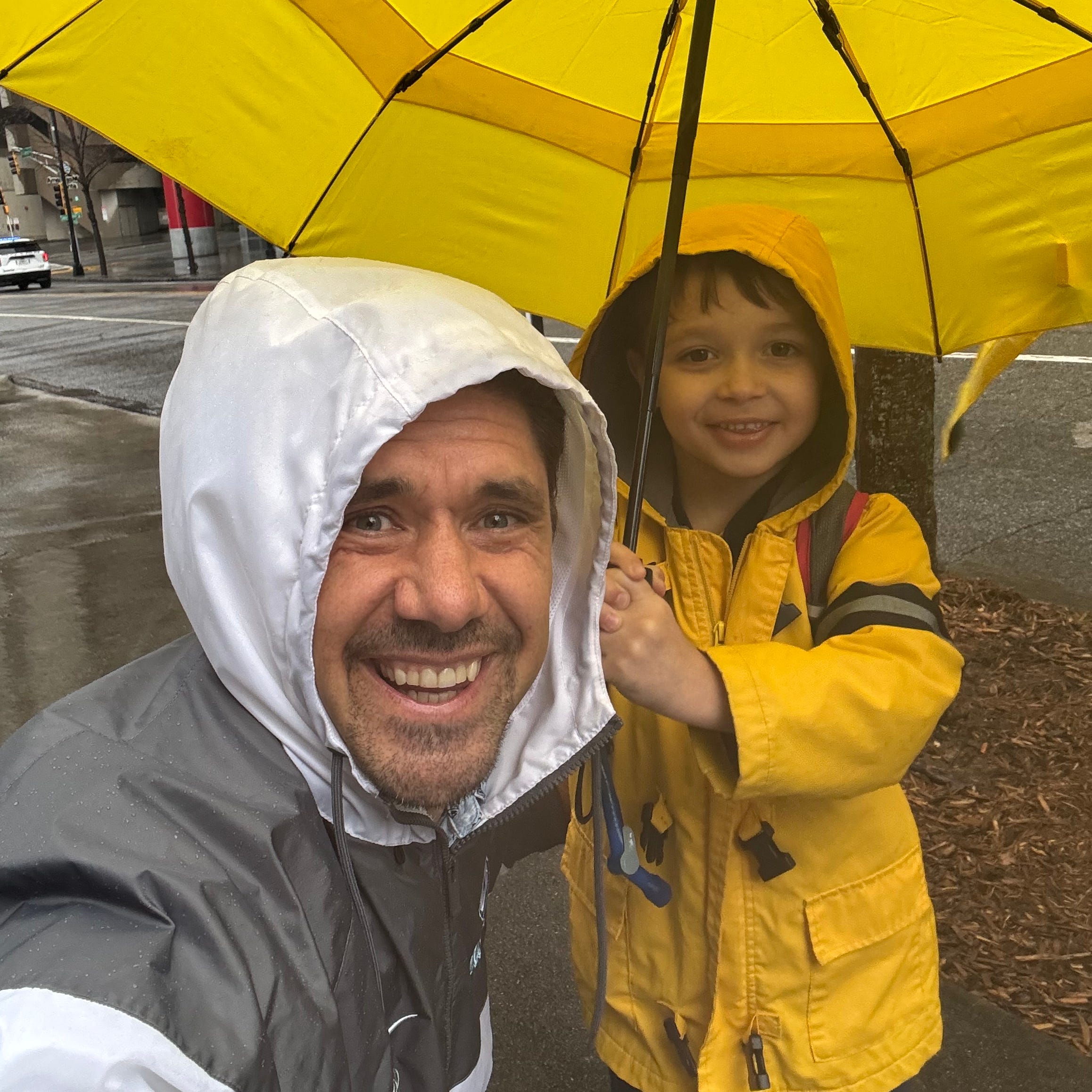
Walking in the rain with my son reminds me of Noah: the storm, the ark, and the rainbow that followed as a sign of God’s covenant promise. The same faithful God promises to heal and restore His people and this should give us hope.
Christians believe in healing. We say we do, at least.
Go to any church on a Sunday morning and you’ll hear prayers for the sick. You’ll hear Scripture about God’s power to restore broken bodies.
You’ll hear people celebrating the cancer that went into remission, the surgery that went better than expected, the recovery that defied every doctor in the room. Those stories are real.
They matter deeply.
But if you take an honest look at the health of the average congregation, something becomes hard to ignore.
The rates of obesity, type 2 diabetes, cardiovascular disease, autoimmune conditions, and chronic fatigue inside the church look almost identical to the rates outside of it. If you walked into a typical church and a typical secular community center and compared health markers, you’d struggle to find a meaningful difference.
That fact bothered us for years. It still does.
Because it raises a question nobody in church leadership seems comfortable asking out loud: if our faith transforms lives, why does it so rarely transform how we care for our bodies?
“For I am the Lord, your healer.” — Exodus 15:26
If you’re new here, Welcome to Bible Health is where we start. And the advice making this worse?
We cover that in The Health Advice That Is Destroying Christian Families.
The Conversation That Changed Everything
Dr. Z here.
About 20 years ago, I sat down with a pastor named Roger. He’d recently lost his wife, and the grief was enormous.
Like a lot of people moving through deep pain, he turned to food. What started as emotional eating eventually became a daily pattern he couldn’t break.
Over months and then years, his weight climbed steadily. Severe emphysema developed.
His breathing became labored. Simple tasks left him winded and frustrated.
I did what any well-meaning Bible health evangelist does... I sat across from him and gave him the facts.
The damage sugar does to the body. The inflammation it creates.
The way his system needed real nourishment, not comfort. I tried everything I could think of to get through to him.
What he said next, I’ll never forget.
He looked me straight in the eye and said: “Eric, Christians don’t drink. Christians don’t smoke. But we’ve got to be able to do something. So we eat.”
That one sentence exposed something the church has been quiet about for decades. And it haunted me for years afterward, because I knew he was right.
Not about the eating being acceptable. About the silence that made it feel that way.
“Christians don’t drink. Christians don’t smoke. But we’ve got to be able to do something. So we eat.”
Gluttony has become the acceptable sin.
Not because Christians are weak. Not because pastors don’t care.
But because nobody has given God’s people a coherent way to think about the connection between their faith and their physical body.
The church has built an entire discipleship system that addresses the soul and the spirit while treating the body like it’s irrelevant to what God cares about. And that silence is costing us more than most people realize.

Our Bible Health Substack is designed to stop the silence. Some conversations change everything.
This one changed how we see the church, the body, and what God expects from both. And it opened up the door for us to share our Christ-centered essential oils books all over the world— including Christian media like the 700 Club.
The Church is starving for this type of information, and we’re here to serve in any way that we can!
“I’m grateful to be here, receiving encouragement, recipes, and whole-body transformation. Even after trying times, I trust you and Mama Z. The spiritual aspect completes the system: body, soul, and spirit.”
— Ellen D.
The Discipleship Gap Nobody Talks About
Go to the average church and listen to what gets taught as spiritual discipline. Prayer, absolutely.
Repentance, yes. Marriage, purity, Bible study, forgiveness, evangelism.
These are essential conversations. They should be happening.
We’re not questioning any of it.
But when was the last time you heard a sermon about what you eat? About how you sleep?
About the products you put on your skin or the chemicals you bring into your home? When was the last time a pastor stood at the pulpit and addressed the way chronic inflammation affects your ability to pray, to be patient with your kids, to hear from God clearly?
Most churches have never given their people a coherent Biblical approach to health. We’ve treated it like a personal preference.
Like it’s nice if you’re into that kind of thing, but it’s not really a matter of discipleship. It’s not the pastor’s job.
It’s not spiritual.
Except Scripture says something very different.
“Do you not know that your body is a temple of the Holy Spirit within you, whom you have from God? You are not your own, for you were bought with a price. So glorify God in your body.” — 1 Corinthians 6:19-20
“Every athlete exercises self-control in all things. They do it to receive a perishable wreath, but we an imperishable.” — 1 Corinthians 9:25
Paul isn’t being polite here. He’s not suggesting an optional add-on to your faith.
He’s describing something central to what it means to follow Christ: the body belongs to God, and how you treat it is part of your worship. Self-control over the body isn’t a fitness trend.
Paul puts it right alongside the imperishable crown. He takes the physical body as seriously as any other part of the believer’s walk.
And yet we’ve somehow decided it doesn’t belong in discipleship conversations.
The gap between what we believe about the body and what we actually do with it keeps growing wider. And the church keeps looking the other direction.
What Actually Happens When the Body Breaks Down
Here’s what we’ve seen over and over in the families who come through our ministry. They’re praying.
They’re in the Word. They’re attending church.
By every spiritual metric they know how to measure, they’re doing everything right. But they’re exhausted.
They can’t focus. They’re short-tempered with their kids.
They lie in bed at night feeling distant from God and from each other, and they can’t figure out why.
Nine times out of ten, their bodies are screaming.
The research on this is clear and it’s extensive. Poor sleep doesn’t just make you tired.
A 2015 review published in Frontiers in Human Neuroscience found that sleep quality directly impacts self-control capacity, including the ability to regulate emotions and inhibit impulses. The researchers showed that even moderate sleep loss reduces the very cognitive functions you need to exercise patience, kindness, and self-discipline.
Paul calls those the fruit of the Spirit. Science calls them executive functions of the prefrontal cortex.
They’re describing the same thing, and they both break down when you don’t sleep.
Nutritional deficiencies tell a similar story. A review in the Indian Journal of Psychiatry found that deficiencies in folate, vitamin B12, iron, zinc, and selenium are significantly more common among people with depression than those without it.
These nutrients are directly involved in the production of serotonin, dopamine, and norepinephrine, the neurotransmitters that govern your ability to feel peace, joy, and connection. When those building blocks are missing from your diet, your brain literally cannot produce the chemicals it needs to function well.
That’s not a character flaw. That’s biology.
Then there’s your gut. A 2017 study in Clinical Practice found that gut inflammation and dysbiosis (an imbalance in your gut bacteria) are directly linked to anxiety and depression through what researchers call the gut-brain axis.
Inflammatory cytokines from a damaged gut cross the blood-brain barrier and affect brain function. If your gut is chronically inflamed from processed food, stress, or environmental toxins, your brain is getting the signal that something is wrong, and it responds with anxiety.
Your mind tries to explain the feeling, but the source is your digestive system, not your circumstances.
And for our family, mold was the final piece. Research published in Toxicology and Industrial Health documented that patients with confirmed mold exposure histories showed neurological and neuropsychiatric symptoms including cognitive impairment, brain fog, depression, and mood instability.
A 2018 review in Clinical Therapeutics confirmed that mycotoxins (the toxic compounds mold produces) can directly affect the nervous system and trigger immune responses that compound the neurological damage. That’s exactly what was happening in our home.
Around 2016, our marriage was in serious trouble. We had young children, financial stress, and a house we later discovered was growing toxic black mold in the walls.
Our bodies were breaking down, and as they did, everything else broke down with them. Patience evaporated.
The closeness we’d built over years started to erode under the weight of something we couldn’t name. We were doing everything right spiritually, and it felt like nothing was working.
It wasn’t until we addressed the physical foundation (the mold, the nutrition, the sleep) that the fog started to lift. And when the physical fog cleared, the spiritual fog cleared too.
More capacity for each other. More capacity for God.
More ability to actually be present when we prayed instead of just going through the motions on empty. We share more about that season in We Almost Got Divorced.
That season is the reason we do this work. Not the books.
Not the speaking events. That season.
“Thank you so much for everything you all do, and especially today for the Scriptures. I really needed those today.”
— Mary G.
The Knowledge That’s Actually Missing
“My people are destroyed for lack of knowledge.” — Hosea 4:6
The knowledge that’s missing from most churches isn’t nutritional information. It’s not about macros or supplements or the latest protocol that went viral on social media last week.
The missing knowledge is theological. It’s the understanding that the body isn’t separate from your spiritual life.
That caring for it is an act of worship. That how you sleep, eat, and move is part of your obedience to the God who made you and bought you with a price.
When someone finally grasps that their body belongs to God and that caring for it is part of honoring Him, the motivation shifts completely. You’re not just “eating better.”
You’re tending to what you’ve been entrusted with. Exercise stops being about vanity or appearance and becomes an acknowledgment that this body was built to function, to serve, to worship in full capacity.
The heart changes first, and the habits follow.
That shift is the difference between religion and faith. Between white-knuckling another diet and actually understanding what God designed your body for.
“I appeal to you therefore, brothers, by the mercies of God, to present your bodies as a living sacrifice, holy and acceptable to God, which is your spiritual worship.” — Romans 12:1
Paul said bodies. Not prayers.
Not good intentions. Not church attendance.
Bodies. The physical, tangible thing you live in every single day.
Presenting that body to God is worship. And if it’s worship, it means something for how you treat it on a Tuesday afternoon when nobody is watching.
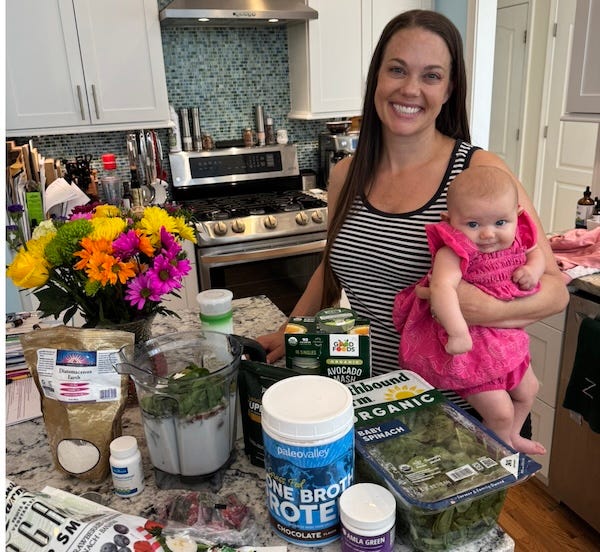
Bible Health happens here. Real food, real family, real life.
The kitchen is where worship meets breakfast smoothies and we bring the kids along for the ride to pass down the legacy.
A Prayer for You. 🙏
Father God, thank You for creating my body with purpose and for teaching me how to care for it through Your Word.
Help me become a disciple in every area of my life, including my health.
Give me wisdom to put what I know into practice, one faithful step at a time.
Let my family and my church grow strong and healthy, so we can serve You fully.
Amen.
Upgrade and learn what God’s Word says about every area of life
and how to live it. That’s what Bible Health is all about.
Walk each 6-week live group study the day it opens.
Get the Blueprint and every weekly Swap.
Follow Jesus, not trends, in every area.
As always, our hope and prayer is that you experience the abundant life.
~ Dr. Z & Mama Z
References
1. Pilcher JJ, Morris DM, Donnelly J, Feigl HB. Interactions between sleep habits and self-control.
Front Hum Neurosci. 2015;9:284. https://pmc.ncbi.nlm.nih.gov/articles/PMC4426706/
2. Rao TSS, Asha MR, Ramesh BN, Rao KSJ. Understanding nutrition, depression and mental illnesses.
Indian J Psychiatry. 2008;50(2):77-82. https://pmc.ncbi.nlm.nih.gov/articles/PMC2738337/
3. Clapp M, Aurora N, Herrera L, Bhatia M, Wilen E, Wakefield S. Gut microbiota’s effect on mental health: The gut-brain axis. Clin Pract.
2017;7(4):987. https://pmc.ncbi.nlm.nih.gov/articles/PMC5641835/
4. Brewer JH, Thrasher JD, Straus DC, Madison RA, Hooper D. Neurologic and neuropsychiatric syndrome features of mold and mycotoxin exposure. Toxicol Ind Health.
2009;25(9-10):577-581. PMID: 19854819. https://pubmed.ncbi.nlm.nih.gov/19854819/
5. Ratnaseelan AM, Tsilioni I, Theoharides TC. Effects of Mycotoxins on Neuropsychiatric Symptoms and Immune Processes.
Clin Ther. 2018;40(6):903-917.
PMID: 29880330. https://pubmed.ncbi.nlm.nih.gov/29880330/
Amen. It's time we ditch the donuts in the “coffee and donut” equation that precedes some church services. Not a good way to start the day.
This definitely feels like something I need. I’ve been fighting breast cancer for the last 14 years, Stage IV for the last 4 years. Thank yall for doing this.