


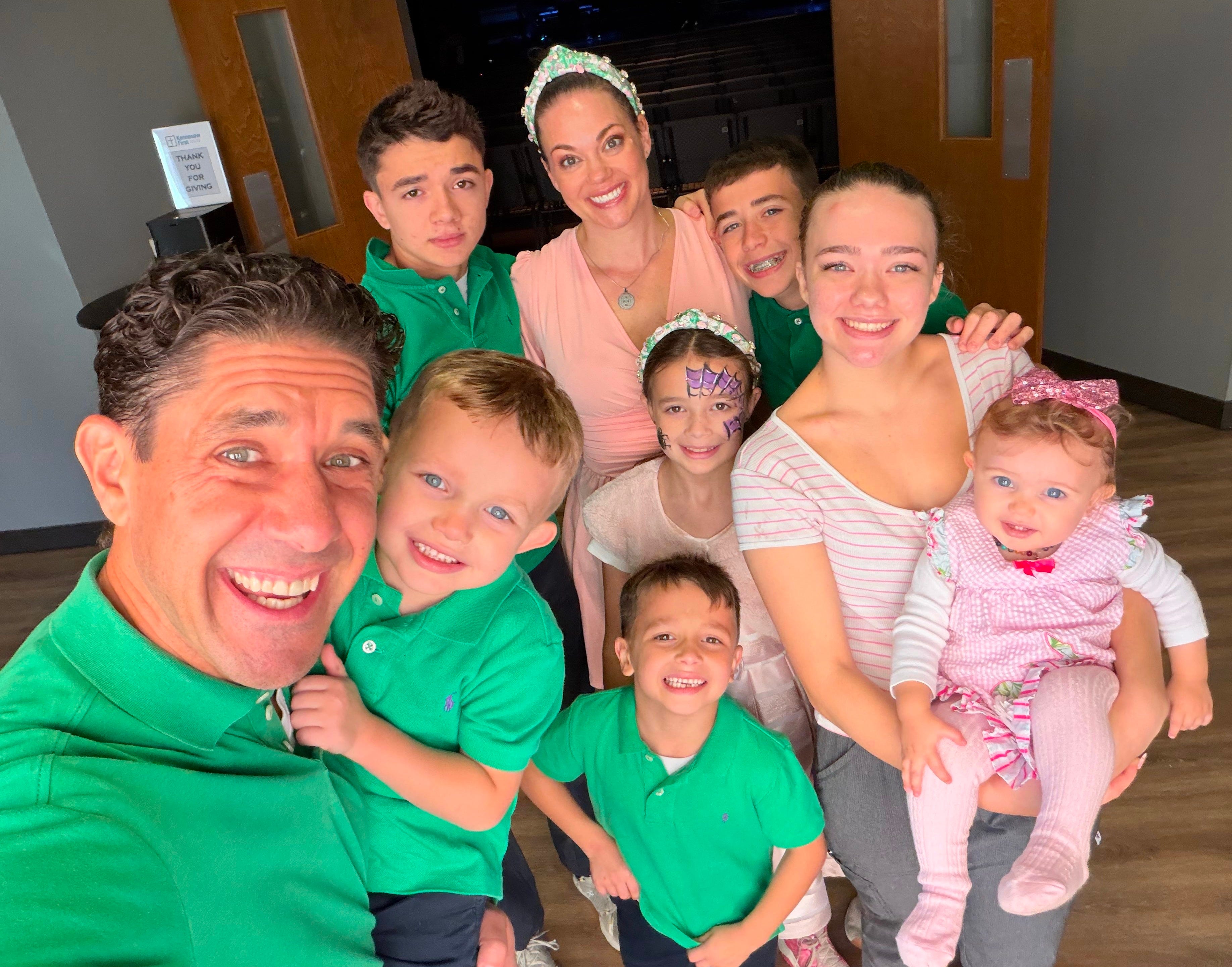
Just got out of church and saw a notification telling us that we became a Substack Bestseller! We don’t take it lightly.
It tells us people are hungry for what God’s Word says about the hard things, like forgiving the person who hurt you. We know that kind of mercy firsthand.
Every good thing in our lives began with a debt we could never repay, forgiven in full. Thank you for walking this out with us...
Most of us can pray the Lord’s Prayer without thinking. That might be the problem.
Somewhere between “give us this day our daily bread” and “deliver us from evil” sits a line we tend to rush:
“…and forgive us our debts, as we also have forgiven our debtors.” — Matthew 6:12
Read it slowly. We are asking God to forgive us the same way we forgive the people who owe us.
Then Jesus finishes the prayer and comes right back to that one line (Matthew 6:14-15). It is almost as if He knew we would skim past it.
Agreeing with that line is easy on Sunday. Living it gets much harder when the wound has a name.
Need a quiet moment with God before you dive in? Start with this short prayer…

So, Why Is It Hard for Christians to Really Forgive?
Here’s the blunt truth: harboring unforgiveness is like drinking poison and expecting someone else to get hurt…
And frankly, most of us want to forgive — we know we’re supposed to, and we’ve heard the sermons.
But wanting to forgive and actually releasing the debt are two different things.
Here’s what keeps so many believers stuck:
Christians were handed a counterfeit. Some of us were taught “forgive and forget,” so we assume we failed the moment we remembered.
Others were taught “forgive for yourself,” which works until forgiving costs us something.
Christians confuse forgiveness with going back. If forgiving them means trusting them again or pretending nothing happened, of course we resist.
Forgiveness, reconciliation, and trust are three different things, and the Church has often blended them into one.
Christians think forgiving lets them off the hook. Deep down, we’re afraid that if we release it, no one will ever make it right.
God never asked us to carry the job of making the universe fair (Romans 12:19).
Christians wait to feel it. We pray for the anger to disappear first, and then we’ll forgive.
But forgiveness usually starts as a decision, and the feelings catch up later.
Christians keep replaying it. Every time the old conversation plays in our heads, the wound reopens, and our bodies react as if it’s happening again.
Christians haven’t fully received forgiveness ourselves. Jesus said:
“But he who is forgiven little, loves little.” — Luke 7:47
It’s hard to give away mercy you’ve never let all the way in.
None of this means you’re a bad Christian. It means you’re a human one who needs grace, just like the rest of us.
And here’s the good news: every one of these has an answer in God’s Word, and that leads us to the forgiveness manifesto we wish we learned when we were kids…
The Bible Health Manifesto on Forgiveness
We reject the idea that forgiveness means calling evil good.
We reject the idea that forgiveness requires anyone to stay in harm’s way.
We reject the idea that forgiveness is just a self-care strategy.
We reject the idea that we get to keep the debt open until they say sorry.
We believe we forgive because God in Christ forgave us (Ephesians 4:32).
We believe God is the Judge, so we do not have to be (Romans 12:19).
We believe forgiveness, reconciliation, and trust are three different things.
We believe God designed the whole person to flourish when bitterness is uprooted.
Manifestos are how we say the hard things in love. Here’s the one we wrote about food and faith…

What Is Forgiveness Therapy?
Forgiveness therapy is a structured process for working through a real hurt. It helps a person release resentment and revenge without pretending the hurt never happened.
It is not “just get over it.” It takes the wound seriously.
Decisional forgiveness is the choice not to retaliate or treat the person as an enemy in your heart.
Emotional forgiveness is the slower process where resentment and bitter replay lose their grip.
The first can happen today. The second may take a long time.
That is freeing news if you chose to forgive, then felt the hurt come back on an ordinary Tuesday. You did not fail.
Feelings often lag behind obedience.
The research is encouraging. A review of more than fifty studies found these approaches increased forgiveness and reduced depression and anxiety.
In 2024, researchers tested a two-hour forgiveness therapy workbook with 4,598 adults in five countries. Within two weeks, unforgiveness dropped and symptoms of depression and anxiety eased.
The body notices too. When people replay a real offense with unforgiving thoughts, their heart rate and blood pressure climb.
A small randomized trial published in 2026 found lower salivary cortisol, a key stress hormone, after a forgiveness workbook.
The largest study to date followed 207,919 people across 23 countries. A forgiving disposition predicted slightly better well-being a year later, mostly in mental and relational health.
The effects were small, and we would rather tell you that than oversell it.
This is how God created you. Scripture leads and science serves, and here the science is simply measuring what Jesus commanded two thousand years ago.
Unforgiveness is one way a home ends up running on stress. Here’s what that looks like, and how to turn it around…

“I’m grateful to be here, receiving encouragement, recipes, and whole-body transformation. Even after trying times, I trust you and Mama Z. The spiritual aspect completes the system: body, soul, and spirit.”
— Ellen D.
Where Therapy Stops and Scripture Starts
Most forgiveness programs end in the same place: forgive for yourself, for your peace and your blood pressure.
It sounds kind. But it quietly puts you at the center.
If forgiveness exists for my cortisol, I am done the moment I feel calm. I am also free to quit the moment it costs me something.
We have said it before: wellness culture keeps handing people tools without discipleship.
You can practice breathing exercises every night and still refuse to forgive.
Jesus never sold forgiveness that way. He rooted it in the Father:
“And whenever you stand praying, forgive, if you have anything against anyone, so that your Father also who is in heaven may forgive you your trespasses.” — Mark 11:25
Then He told a story. A servant owed his king ten thousand talents, a debt no one could repay in a hundred lifetimes.
The king forgave all of it. That same servant walked out, found a man who owed him about a hundred days’ wages, and had him thrown into prison.
“Then his master summoned him and said to him, ‘You wicked servant! I forgave you all that debt because you pleaded with me. And should not you have had mercy on your fellow servant, as I had mercy on you?’” — Matthew 18:32-33
Jesus never calls the smaller debt fake. What was done to you is real.
The point is the contradiction. We receive mercy the size of an ocean and refuse to give mercy the size of a bucket.
Therapists call forgiveness an “altruistic gift.”
Scripture goes further, because it is a gift we pass on after we received it first.
C.S. Lewis wrote, “To be a Christian means to forgive the inexcusable because God has forgiven the inexcusable in you.”
We forgive from grace, not for grace.
And yes, forgiveness does set you free.
“For freedom Christ has set us free; stand firm therefore, and do not submit again to a yoke of slavery.” — Galatians 5:1
Freedom is the fruit of forgiveness. It was never meant to be the reason for it.
“See to it that no one fails to obtain the grace of God; that no ‘root of bitterness’ springs up and causes trouble, and by it many become defiled.” — Hebrews 12:15
Notice the order. The root springs up where someone fails to obtain the grace of God.
Bitterness grows in the soil where grace has been refused. That is why forgiveness is a grace issue before it is ever a health issue.
When science starts sounding like the final word, it’s time to ask a harder question…

“Thank you so much for everything you all do, and especially today for the Scriptures. I really needed those today.”
— Mary G.
What Forgiveness Is Not
Bad teaching on forgiveness has wounded people twice. So let’s be clear.
It is not forgetting. God says, “I will remember their sin no more” (Jeremiah 31:34). He chooses not to hold it against us, and Joseph still called what his brothers did evil (Genesis 50:20).
It is not a feeling on demand. Corrie ten Boom wrote, “Forgiveness is an act of the will, and the will can function regardless of the temperature of the heart.”
It is not reconciliation. Forgiveness takes one person. Reconciliation takes two, and trust requires evidence (Romans 12:18).
It is not silence. You can forgive and still report a crime or protect your children (Romans 13:4).
It is not waiting for an apology. Jesus prayed, “Father, forgive them,” before a single soldier repented (Luke 23:34).
It is not staying in danger. Distance is not bitterness. A boundary is not revenge.
Forgiving someone doesn’t cancel the grief. Here’s how to carry both, God’s way…

A Prayer for You. 🙏
Father, You see every wound I carry and every offense I still rehearse.
Thank You for forgiving a debt I could never repay.
Today I release personal vengeance and trust You as the Judge who judges justly.
Bless my heart with soft soil where bitterness cannot take root.
Give me wisdom for the boundaries I need and courage for the next faithful step.
I forgive because You forgave me.
Amen.
Paid Subscribers Only
Your Bible Health Swap This Week
#025: The Forgiveness Is Freedom Toolkit
This week’s Swap includes the printable 7 R’s of Forgiveness, the Three-Question Filter, Truth Swap Cards, the Replay Interrupt, a Family Table Guide & a Prayer to Release the Debt!
One Swap this week. One faithful step. A transformed life.
Learn more about the Bible Health Transformation Journey and start wherever you are.
“It has truly been amazing for me and my family as we find natural and Biblical ways to improve our health and wellbeing in our home.”
— Wendy J.
