


From our first viral Instagram post after taking a 5-year Sabbatical off of social media? A rant on creatine, and why I’m concerned that it’s 100% synthetic made from petrochemical feedstocks. We’ve reposted it a few times since then and the response is the same. LOTS of feedback from users who report a wide range of side effects and consumers should know about the potential health concerns because it’s touted as being 100% safe.
We put the video up on Substack, and you can watch it here…

Yes, We Know…
We know this article is going to land differently in different people.
We know we are going to take pushback, especially from Substack writers, gym bros, and influencers who promote creatine.
We know the 40-year-old mom of four, the one who feels like she is pulling her hair out trying to keep up, sold on “the most researched supplement on the planet” and now dealing with symptoms she did not expect, is going to read this and finally have an answer.
We know the loudest pushback comes from influencers, not from the day-to-day user, and that tells us everything. We are stepping on marketing toes.
We are stepping on the cognitive dissonance of people who believed a lie and are not willing to admit it.
That is the conundrum of what we do: attacked by colleagues, praised by readers.
Back to the headline.
Would Jesus take creatine? Nope.
And here is why…
A 4th of July Rant Turned Viral
Creatine monohydrate is 100% synthetic and made from petrochemical feedstocks. No one will ever tell you this, and when we discovered the truth last year, we were shocked because everyone seems to be talking about it:
Crunchy moms on Instagram, functional medicine practitioners, health experts, scientists & influencers all promote it. Even our neighbors and friends are now taking creatine.
What was once a gym bro muscle gain strategy in the 90s has gone viral, and we are seeing everyone post about it.
Creatine is literally the number two trending supplement in the world, and there are a lot of red flags about this.
So…
Dr. Z posted a 90-second reel about creatine about Instagram in response to all of this last year on July 4th. By evening before the fireworks were going off it had gone viral.
By the end of the week the comment section was full of men and women writing the same sentence in different words: 'I tried creatine because the influencers told me to, and it made me sick.'
The reports stacked up in the same handful of categories: brain fog and leg cramps, hair shedding and acne, bloat that would not budge no matter how much water they drank. One mom wrote that her husband’s legs cramped so badly mid-football-game that he could not walk off the field.
Another said her gut 'rejected it on the first dose' and took four weeks to recover.
This is the part of the creatine story almost nobody on social media is telling.
No, we’re not anti-supplement, and yes, we understand that many supplements are made from synthetic compounds. But one thing we are concerned about is whether or not we should take a something that gives us 3 to 5 times (and up to 20 times during a loading phase) what we normally get from eating a well-balanced diet.
Yes, a typical 3 to 5 g scoop of creatine is several times what you would get eating a steak. And to take that type of dose for years or decades seems a bit excessive, doesn’t it?
So yes, this is a dosing issue, and it’s also a sourcing issue.
Because here is the truth most Christians are not being given when the algorithm hands them another miracle scoop. Even when a supplement is called 'bioidentical,' even when the research is impressive, even when the influencer you follow says it changed her life, you are still allowed to stop and ask whether the synthetic version of a compound your body already makes belongs in your daily routine.
"But test everything; hold fast what is good." — 1 Thessalonians 5:21
That verse is the spine of this article. Both the science and the chemistry matter, and underneath both is a question every Christian deserves to ask before swallowing the next viral wellness trend: is this helping the body God designed, or replacing something the body was designed to regulate on its own?
This article attempts to answer that question…
Need a quiet moment with God before you dive in? Start with this short prayer…

A Christian Perspective on Health Trends
Christians often face a unique dilemma when it comes to their health. On one hand we are told to follow the science.
Research, experts, and influencers point us toward the latest study, supplement, or strategy that promises better energy, stronger muscles, improved metabolism, and a longer life.
God created science, right?!
In many ways this is helpful, because God gave us the ability to study, learn, and understand the body He created.
On the other hand, as believers we are also called to follow the leading of the Holy Spirit.
"For all who are led by the Spirit of God are sons of God." — Romans 8:14
Sometimes these two things can feel like they are in tension. What happens when the science says something is safe, but something in your spirit gives you pause?
What do you do when nearly every expert is promoting a trend, and yet you feel prompted to slow down, ask questions, and take a more cautious approach? This is where discernment becomes essential, because Scripture reminds us that wisdom is not just intellectual, it is spiritual.
"If any of you lacks wisdom, let him ask God, who gives generously to all without reproach, and it will be given him." — James 1:5
Science can tell us what is measurable, and the Holy Spirit helps guide how we apply that knowledge. Science can explain what appears beneficial, and discernment helps us determine what is truly wise.
We are not rejecting science when we do this. Studying the body, learning from research, and understanding physiology can all be part of caring well for the body God gave you.
As Christians, science is a tool, not our ultimate authority.
"The fear of the LORD is the beginning of wisdom." — Proverbs 9:10
When it comes to something like creatine, the question is not simply, 'Does the science support it?' The deeper question becomes: is this consistent with how God designed the body to function?
Is this helping the body naturally, or replacing something the body was designed to regulate on its own? Is this wisdom, or just another shortcut promising quick results?
These are not easy questions. Yet as Christians seeking wisdom, discernment, and care for the body the Holy Spirit lives in, they are the questions worth asking, especially with creatine.
And something in our spirit tells us that we need to get back to nature more and not rely so much on petrochemicals. Because plastics are everywhere, synthetic supplements and food fill our plate, and we have this sinking suspicion that it is all going to catch up with us one day.
But the science says it’s okay. Well, we’ve been sold that lie before, haven’t we?
“The powers that be” are selling today’s synthetic, petrochemical, plastic driven propaganda pretty hard right now.
Can you see it?
We’re being told that everything is safe and effective, even though our world is becoming more like Dr. Seuss’s Thneedville from his book, The Lorax, each and every day. And yes, creatine is part of this matrix.
“I’m grateful to be here, receiving encouragement, recipes, and whole-body transformation. Even after trying times, I trust you and Mama Z. The spiritual aspect completes the system: body, soul, and spirit.”
— Ellen D.
The Bioidentical Creatine Myth
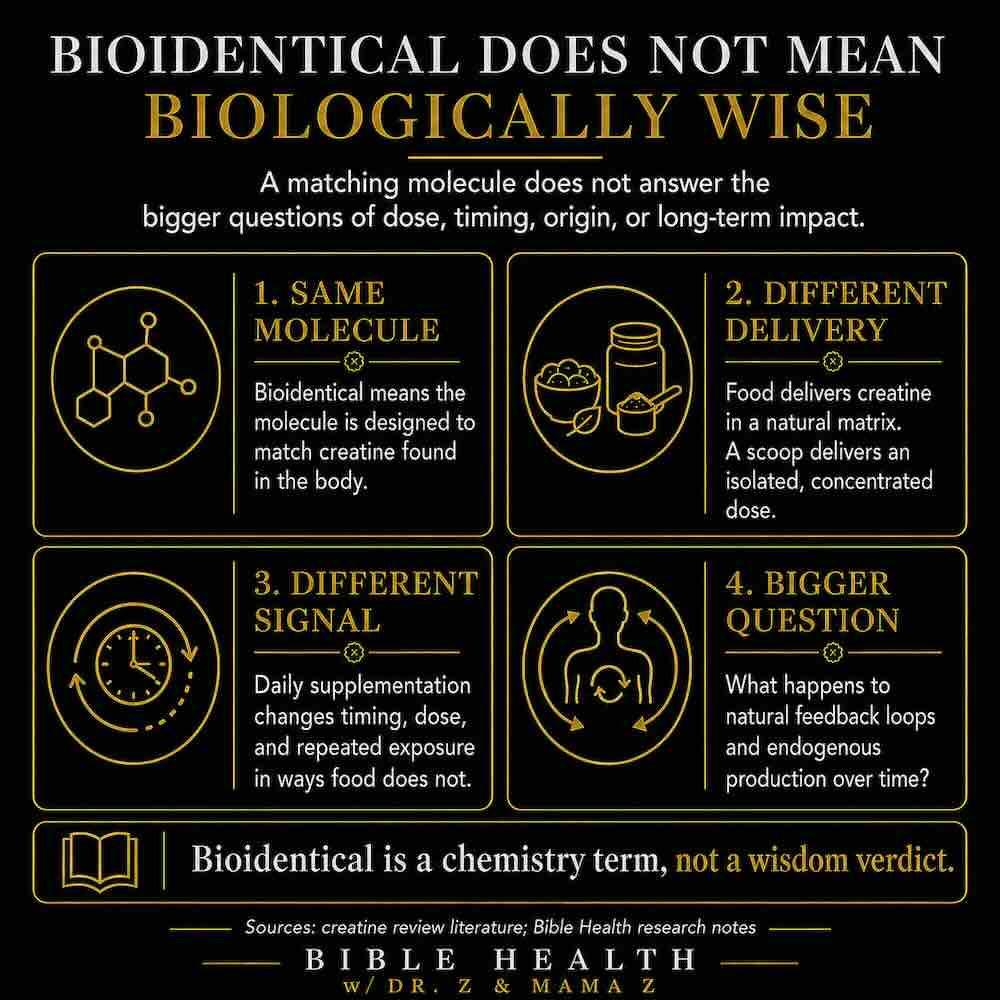
"Creatine is safe because it’s bioidentical to naturally occurring creatine."
It is not that simple, and the leap from bioidentical to harmless skips three real layers of biology.
Even though creatine is bioidentical to what your body makes, supplementing it in high doses over the long term may not be as harmless as it seems. Creatine is not made in one place.
It is produced by your liver, kidneys, pancreas, testes in men, and brain. When the body senses a steady incoming dose, the systems that produce it can quiet down, which is exactly what God designed feedback loops to do.
Researchers studying creatine transporters (CT1) and the enzymes that help make creatine inside the brain have specifically warned that long-term, higher-dose use may blunt the body’s own production, and push the body to need higher doses to see the same results.
The honest conclusion from one recent review reads almost word-for-word:
“The net effect of a long-term, higher dosage creatine intake on CT1 activity, brain creatine uptake, and/or endogenous brain creatine synthesis remains to be determined.”
That sentence is the entire issue. The body that knit you together knows how to make creatine.
The question is what daily synthetic supplementation does to that God-given system over the course of a lifetime, and we do not yet have the human data to answer it.
The marketing pretends to settle the question. The chemistry does not.
There are at least four reasons the bioidentical-equals-harmless argument falls apart on closer reading:
Dose: food provides creatine in a natural matrix, while a scoop of powder delivers an isolated compound in a concentrated dose.
Timing: your body makes and uses creatine in context, and daily supplementation creates a repeated exposure pattern that may not match natural production.
Matrix and cofactors: natural nutrients in food are delivered with amino acids, minerals, fats, and other compounds that affect absorption and metabolism.
Downregulation: when you take creatine in supplement form, you may be telling your organs to stand down, reducing their own natural production over time.
At the receptor or enzyme level, if a molecule is truly identical, there is no known mechanism by which the body can distinguish where it came from. At the systems level, the body clearly detects differences in how, when, in what combinations, and in what doses molecules appear.
Food-bound nutrients are not the same systemic input as isolated megadose nutrients, and a nutrient produced by your body is not the same long-term signal as a synthetic scoop taken every day for decades.
Bottom line: we simply do not have the long-term human data to guarantee safety for people who want to take creatine for the rest of their life.
Yes, we understand that people have been taking creatine for decades, and they claim no problems at all. Maybe, maybe not.
Can they really track down every symptom they’ve ever had to one isolated cause? No. They’ll have no idea if creatine was ever a contributing factor to any health issue, and no one has perfect health.
We always go back to the 80-year-old man who’s been smoking Marlboro since he’s been a teenager and doesn’t have cancer. Is that proof that smoking is not harmful?
Of course not, so keep in mind if you are considering creatine, especially at high doses, remember that you are stepping into an experiment where the full results are still unknown.
The bioidentical myth is just the beginning of how influencers and social media has conflated the inherent safety of creatine because of its chemical structure.
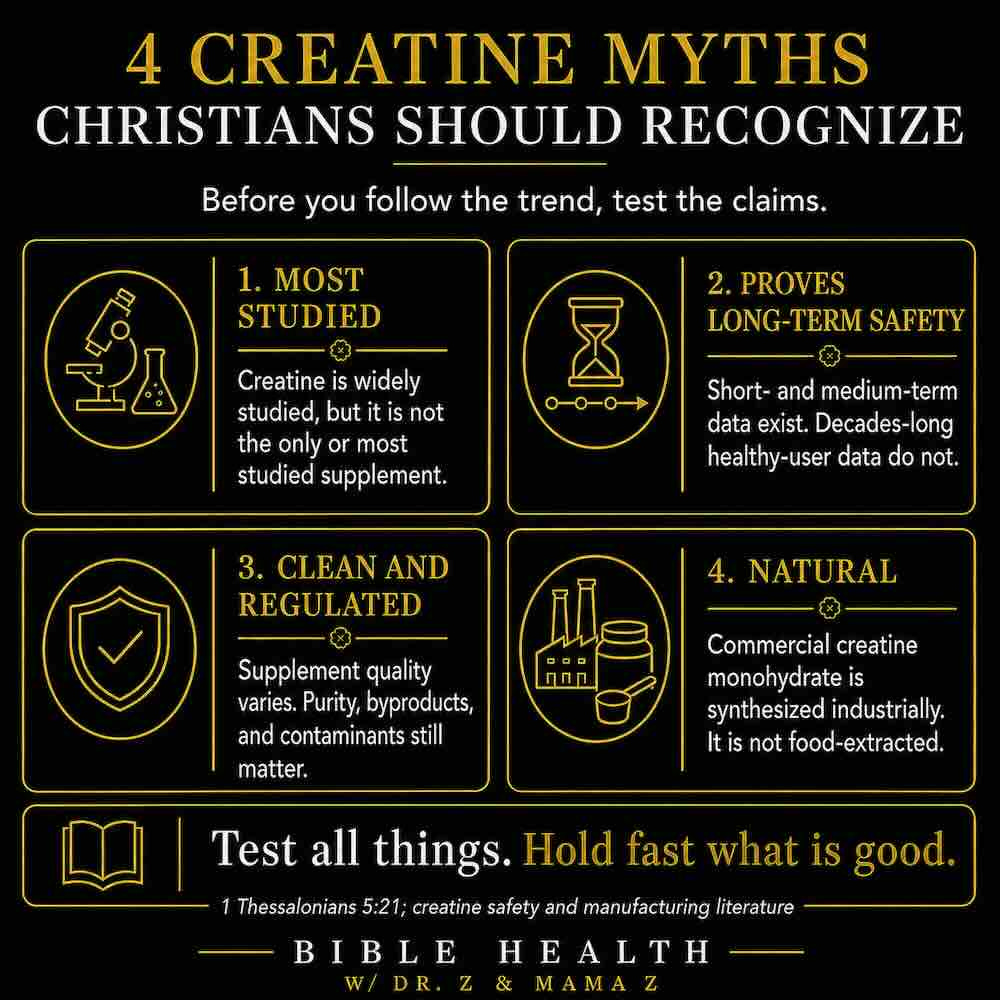
4 More Creatine Internet Myths Christians Should Recognize
Whether the potential benefits outweigh the potential risks, we will leave you to pray about. Personally, we have never taken it, nor do we plan to, because there are details most people do not know.
These are the four myths we hear most often.
Myth 1: "Creatine is the most studied supplement on the planet"
This is false, and it is one of the arguments influencers use to explain why they recommend creatine monohydrate. Yes, creatine is one of the most popular and well-studied supplements on the market with more than 1,300 studies published to date.
A casual Google or ChatGPT search will confidently call it the number-one studied supplement on the planet, and that confident claim has helped deify creatine into something it is not.
To put things into perspective, vitamin D, omega-3s, and probiotics have been studied more often and for longer periods of time. Randomized controlled trials are widely considered the gold standard for assessing the effectiveness of interventions in healthcare, and this is what we see from research reviews and database searches:
Vitamin D = 1,500+ RCTs
Omega-3s = 1,200+ RCTs
Probiotics = 1,000+ RCTs
Creatine = 600 to 800 RCTs
Multivitamins = 400 to 600 RCTs
Myth 2: "Long-term research proves creatine is safe"
This is also false. Yes, there are clinical studies and observational follow-ups spanning up to 5 years, and even as long as 8 years in clinical contexts such as Parkinson’s disease, where creatine supplementation continued without major adverse effects.
One of the longest commonly cited published studies evaluating creatine supplementation in healthy athletes lasted 21 months. In this study, 98 college football players took creatine monohydrate daily as part of their regular training, and comprehensive blood and urine markers of health were monitored throughout the period.
The results showed no adverse effects on health markers compared to non-supplementing athletes, and that is the entire body of evidence for long-term safety in young, otherwise-healthy men eating a high-protein training diet.
That is not the same as saying daily synthetic creatine over a 30, 40, or 50 year life is safe.
There is another claim about an alleged 14-year study, and according to everything we have searched, it does not exist outside a reference to it in a couple of papers. One of the most recent literature reviews, for example, references a 14-year study, but does not provide the actual citation, which is a serious problem in published research.
Bottom line: we do not have research to support that taking synthetic creatine long-term is safe and won’t negatively contribute to health issues as people age.
Fact is, we really do not know what will happen to someone who consumes bioidentical petrochemical-based synthetic compounds over the course of their life. We are speculating, and we should be.
We are questioning the science, and we should be. We are going against the status quo, and that is exactly what researchers should be doing.
Myth 3: "Creatine is clean and regulated"
Unlike pharmaceutical drugs, supplements are not approved by the FDA for safety and effectiveness before they are allowed to be marketed. Third-party evaluations and self-regulation are how the industry actually polices itself.
Creatine purity and contamination are legitimate concerns, because the manufacturing process can introduce unwanted byproducts such as dicyandiamide, dihydrotriazine, creatinine, and other contaminants. Many creatine products have, in some cases, been found to exceed recommended safety limits.
If the product is labeled as Creapure, it is manufactured exclusively in Germany under stricter safety and quality controls. Creapure is produced in a dedicated, GMP-certified facility, every batch is tested for purity and contaminants, and typical purity is reported at 99.99%.
Stringent protocols help keep undesirable byproducts low, and the brand is widely recognized in the supplement industry as the gold standard for creatine purity. But better quality control does not make it natural.
Yes, even Creapure, is 100% synthetic. Yes, look it up if you don’t believe us, because people fight us about this all the time on Instagram.
It’s right there on their website, which was the basis for a lot of our research in this article
Myth 4: "Creatine is natural"
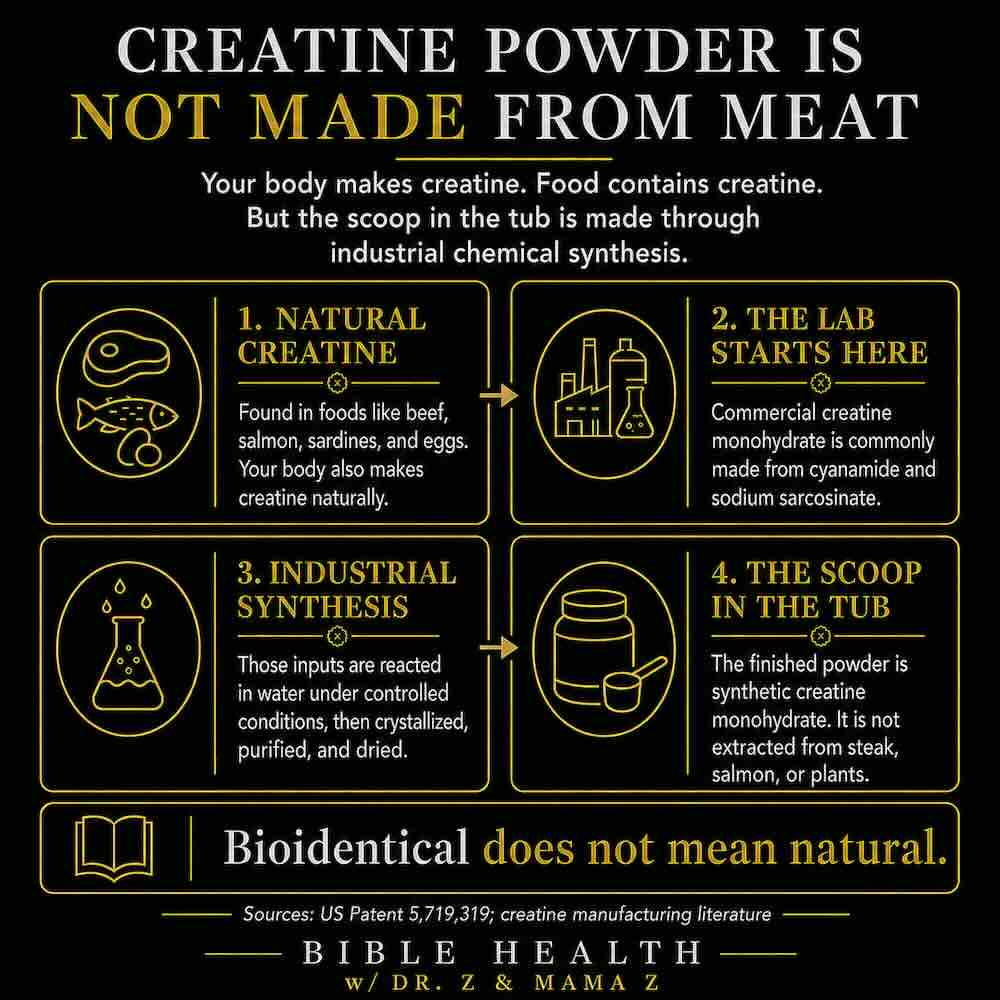
Most people assume creatine is natural because it is found in meat, fish, poultry, and made by the body, and that much of the claim is actually true. The creatine you buy in powder form, however, is not extracted from food, and it is not fermented.
The creatine monohydrate you see on the market is manufactured in a lab using synthetic chemicals. That is a fact, not an opinion, and it is backed by patents, chemistry textbooks, and industrial manufacturing data.
Let’s break it down, because once you see how this powder is actually made, you cannot un-see it.
How Creatine Supplements Are Really Made
The most common form of creatine, called creatine monohydrate, is produced by reacting cyanamide with sodium sarcosinate in water. The reaction happens at a controlled temperature and pH, and the end product is crystallized, purified, and dried into powder.
This process is detailed in US Patent 5,719,319, which has served as the foundation for creatine manufacturing worldwide since the 1990s.
Here is what most labels do not tell you about the raw materials.
Cyanamide is made through industrial chemical processes involving fossil-fuel-derived inputs.
Sodium sarcosinate is the sodium salt of sarcosine, and sarcosine is commonly made by reacting monochloroacetic acid with methylamine inside an industrial reactor, not a plant and not a fermentation tank.
The raw materials, cyanamide and sodium sarcosinate, trace back to petrochemical and fossil-fuel industrial feedstocks
Tracing the Raw Materials to Their Root Ingredients
Let’s go one layer deeper, because the back end of this supply chain is where the petrochemical fingerprint becomes obvious.
Sodium sarcosinate comes from chloroacetic acid and methylamine. Chloroacetic acid is made from acetic acid and chlorine gas through high-energy industrial processes that rely on petrochemical chemistry.
Acetic acid is typically produced from methanol and carbon monoxide via carbonylation, making it petrochemical-based. Methylamine is manufactured from methanol and ammonia, where methanol is commonly derived from natural gas and ammonia is produced from nitrogen and hydrogen drawn from fossil fuels.
Cyanamide is created through energy-intensive industrial processes historically connected to calcium carbide, limestone, coal, nitrogen, and other industrial inputs.
The bottom line: the key raw materials for creatine monohydrate (methanol, ammonia, acetic acid, and carbon sources like coal) are primarily derived from petrochemical or fossil-fuel sources. From what we can tell, no company on the planet uses natural sources to create creatine monohydrate.
It is simply too cost-prohibitive.
During industrial production, variable amounts of contaminants can be generated, including dicyandiamide, dihydrotriazines, creatinine, and various ions. Even premium brands have better quality control, not a different origin story.
The creatine in your powder is a synthetic compound manufactured using industrial chemicals. It is not natural in any meaningful sense of the word.
This is why the No-No Allergy List matters even outside the kitchen. Once you train the eye to spot synthetic petrochemical inputs masquerading as natural, the same lens applies to the supplement aisle.
Reported Benefits of Creatine
Let’s start with the science. The research is impressive and spans back to the mid-1920s.
As people who have studied natural therapies since 2003 and their impact on human physiology, we are not dismissive of the creatine literature. We are asking whether the risks outweigh the benefits, and whether we are better off getting creatine the way God designed our bodies to process it.
We will leave that for you to pray about.
Supplementing with creatine monohydrate raises creatine levels in the body, and creatine has been studied for everything from muscle growth and exercise capacity to bone health and insulin sensitivity. The benefits appear to go far beyond athletes.
If you are looking to preserve lean muscle mass, fuel your brain through a demanding season, or simply age more gracefully, the research suggests creatine has something to offer. Remember that these benefits come from studies using supplemental creatine, which is exactly why this topic requires discernment.
Lean Muscle and Strength
Creatine helps muscles perform better during resistance training and recover faster afterward. This is especially helpful for preserving lean muscle mass and preventing loss of muscle as we age, which is a key factor in avoiding weakness, falls, and metabolic decline.
Brain Function and Mental Clarity
Creatine does not just fuel your body, it also fuels your brain. Research shows healthy brain creatine levels may improve memory, cognitive performance, and mental clarity, especially during sleep deprivation, mental fatigue, or high-stress periods.
Brain health and executive function may improve as ATP levels in the brain become more readily available.
Muscle Recovery and Inflammatory Balance
By pulling water into muscle cells, creatine aids tissue repair and may reduce post-exercise soreness. It also helps the body regulate inflammatory responses from workouts and physical stress, which makes it easier to keep training.
If you feel better after you exercise, you are more likely to stick with it.
Hormonal Balance and Bone Health
Proper creatine levels may help maintain bone density and lean muscle mass in women, especially during menopause or postpartum recovery. While creatine alone may not increase bone mineral density, it can build muscle strength and coordination, which reduces fall risk and gives the skeleton a stronger frame to hang on.
Glucose Metabolism and Heart Health
Creatine has been linked to improved insulin sensitivity and glucose uptake, helping regulate blood sugar. It may also help heart function and circulation, though more research is still emerging.
If blood-sugar balance is the goal you are chasing, the path that does not require a synthetic powder runs straight through real food, hydration, sleep, walking, and stress management.
“Thank you so much for everything you all do, and especially today for the Scriptures. I really needed those today.”
— Mary G.
Why Creatine Is Trending, Especially for Women
If you are a woman over 40, you have probably seen the message everywhere lately. Creatine is being called the new must-have supplement for perimenopause, menopause, muscle tone, bone strength, brain fog, metabolism, and healthy aging.
To be fair, the conversation is not coming out of nowhere.
Women do lose muscle more easily with age. Hormonal shifts can affect energy, recovery, mood, sleep, body composition, and bone density.
Strength training becomes more important, not less important, as women move through midlife. The reasons creatine is suddenly everywhere include:
More women are lifting weights, and creatine pairs naturally with resistance training and muscle strength goals without making you bulky.
It is a stimulant-free energy story (no caffeine, no hormones).
Muscle equals metabolism, and more skeletal muscle improves fat burning and metabolic health.
Some researchers are reporting hormonal resilience benefits during cycles, postpartum, and menopause.
Emerging studies show potential mood and mental health benefits.
It fits the strong-not-skinny mindset (muscular strength and definition without bulk).
Early research suggests potential perinatal benefits, though this is still emerging and should only be considered with qualified professional guidance.
Your body naturally makes creatine from three amino acids: glycine, arginine, and methionine. This happens primarily in your kidneys, liver, and pancreas.
You also get a fair amount from red meat and fish, which is why a high-protein diet matters.
So the issue is not whether women over 40 should care about muscle, strength, aging, or brain health, because they absolutely should care deeply about all of it. The issue is whether the answer needs to be a daily scoop of synthetic creatine monohydrate made from industrial chemical inputs, especially when women are being encouraged to take it for years or decades.
As we explained earlier, commercial creatine is not extracted from steak, salmon, or real food. It is manufactured in a lab, most commonly by reacting cyanamide with sodium sarcosinate, and those raw materials trace back to industrial petrochemical pathways.
That is where discernment matters.
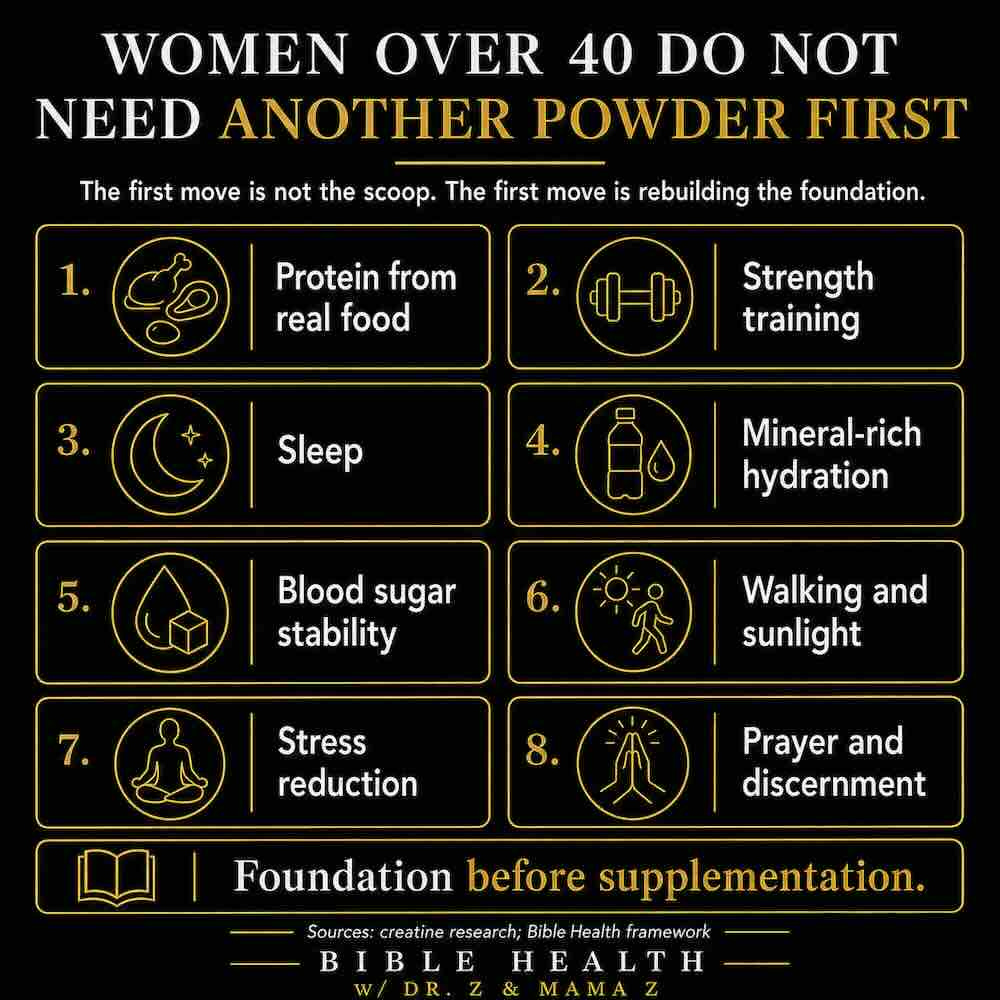
A 45-year-old mom who is exhausted, under-muscled, under-slept, stressed, inflamed, eating too little protein, and barely lifting weights does not first need another powder. She needs to rebuild the foundation God designed her body to run on.
That means protein from real food, strength training that builds muscle and bone, better sleep, mineral-rich hydration, blood sugar stability, sunlight and movement, less synthetic fragrance and plastic exposure and daily toxin load, and prayer, peace, and nervous system regulation.
Creatine may give some people a measurable bump in performance, especially when baseline creatine stores are low. Even mainstream sources admit it is not a magic bullet for aging, menopause, memory, or fitness, and benefits depend on personal physiology, baseline creatine levels, dosage, absorption, training, and nutrition.
That is why we are not impressed by the social media claim that every woman over 40 needs creatine.
No, every woman over 40 needs wisdom and personalized health care.
That’s worth repeating, isn’t it?
“Every woman over 40 needs wisdom and personalized health care.”
If you are not eating enough protein, not lifting weights, not sleeping, not walking, not addressing stress, and not reducing inflammatory inputs, creatine is not going to fix the foundation. If you do choose to use it, at minimum you should understand what it is, how it is made, what we know, what we do not know, and why there are no decades-long human studies proving the safety of daily synthetic creatine use across midlife and aging.
Reported Side Effects (Clinical and Real-World)
Creatine is touted as one of the most effective supplements available, and we know people react differently to substances, especially synthetic ones. Let’s look at what is commonly listed as a side effect, plus what people in our community are actually reporting.
Common Clinical Side Effects
The most commonly reported side effect is temporary water retention, especially during the first few days of use. This is not fat gain, it is intracellular water (water being stored inside your muscle cells), and it is part of the mechanism that improves muscular strength and exercise performance.
Some people experience mild bloating or notice the scale move up a pound or two, which is usually not harmful and typically resolves with regular use and adequate hydration. Other users find this water retention highly uncomfortable and feel it never seems to subside.
Another occasional effect is mild digestive upset, such as nausea, diarrhea, or stomach discomfort. These symptoms are more likely to occur with large-dose creatine supplementation or when taken on an empty stomach.
Other reported effects include dizziness, excessive sweating, and rarely muscle cramps, though controlled studies do not support a higher risk of cramping.
Longer-term observational studies have found no serious adverse effects when creatine is taken within recommended guidelines, and concerns about renal dysfunction and liver problems have not been supported by controlled research in healthy users. Anecdotal reports continue to come in, especially when underlying health concerns may not be evident and creatine supplementation is not well monitored across the board.
Real Experiences From Our Community
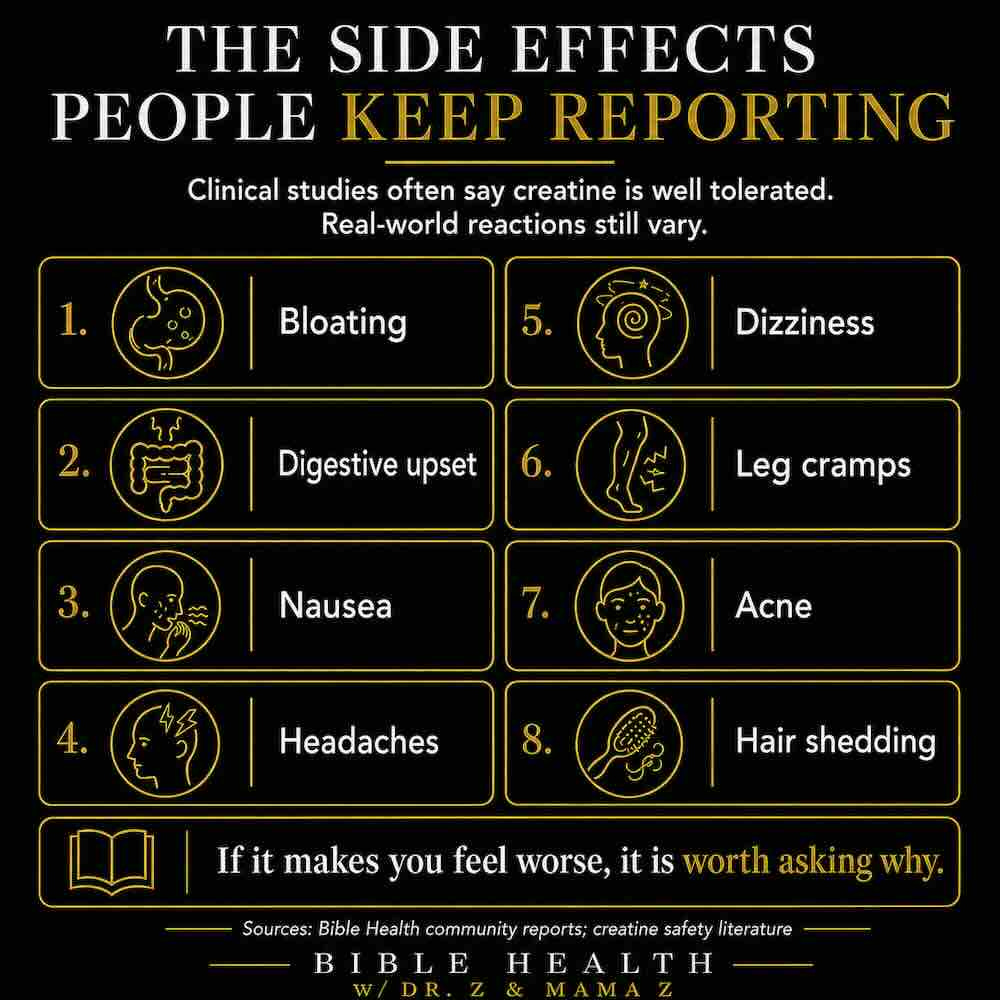
While clinical studies show general safety, we have been collecting real experiences from our Instagram community, and some of these reports deserve a serious second look.
This is just a tiny snapshot of the hundreds of comments we have received:
@artbej56: “I took creatine for just a short period and developed high uric acid levels including early stage of gout. I got off of creatine and the gout is gone. Synthetics overburden our bodies.”
@glizzydoobie: “I was on creatine for a week and it started making my heart hurt, stopped taking it and the heart/side pain went away so i never took it again.”
@steffanymcgee: "My husband took it and started experiencing cramps in his legs, and I started breaking out with huge acne lesions. I will never touch creatine again. Our ancestors lived without taking this ‘miracle’ supplement, and so will I."
@karla.texas: "I tried creatine without knowing what you just taught me, but I had to stop after a few days because it made me sick every time I took it. Thank you for letting me know the truth. God bless you."
@roseanne.razzano: "My son took it years ago during football. It dehydrated his muscles so badly that he had several hamstring cramps during the game. The same with the other players."
@finsta_nikki555: "@drericz made my hair fall out."
@ave_maria315: "I took it as well and experienced many gastro-related side effects. I’m done!"
@insta_ashleyeverly: "Someone I know started taking creatine last year because of all this content saying it’s amazing and it affected them negatively, not right away. Took a couple of months. They got off of it, and their symptoms went away. A year later they tried it again and this time it almost immediately caused health issues, again."
@tra561: "Was not a good fit for us, created elevated PSA and hair loss."
@lauras_healthy_style: "My gut rejected it on the first dose! It’s taken me four weeks to get my digestion back. Thanks for sharing, I didn’t know that it is synthetic. I avoid all synthetic foods."
@aheartsatisfied: “I took creatine because you’re right, it’s highly recommended and seemingly proven safe with many benefits. It made me so SICK. Yet everything online tells you it’s fine and there aren’t side effects. I found Reddit’s where people were discussing this very issue. Many have had the same symptoms I did: nausea, dizziness, headaches, stomach aches, bloating despite how much water you drank for long periods. I stopped taking it because clearly it was hurting me. I also felt convicted. Our body naturally produces creatine. The stuff in a jar is synthetic and unnecessary. Now I understand whatever synthetics it’s made of made my body ill. My training is going amazing without it.”
These are not isolated voices, and they are not just 'a few sensitive people.' These are Christian women, husbands, sons, and mothers who tried the trend, trusted the science, and ended up sicker than when they started.
They deserve a more honest conversation than the algorithm is giving them.
Paid Subscribers Only
Your Bible Health Swap This Week
#007: Mama Z’s No-No Allergy List
This week’s Swap includes Mama Z’s printable No-No Allergy List from her Non-Toxic Kitchen Guide!
One Swap this week. One faithful step. A transformed life.
Learn more about the Bible Health Transformation Journey and start wherever you are.
“It has truly been amazing for me and my family as we find natural and Biblical ways to improve our health and wellbeing in our home.”
— Wendy J.
